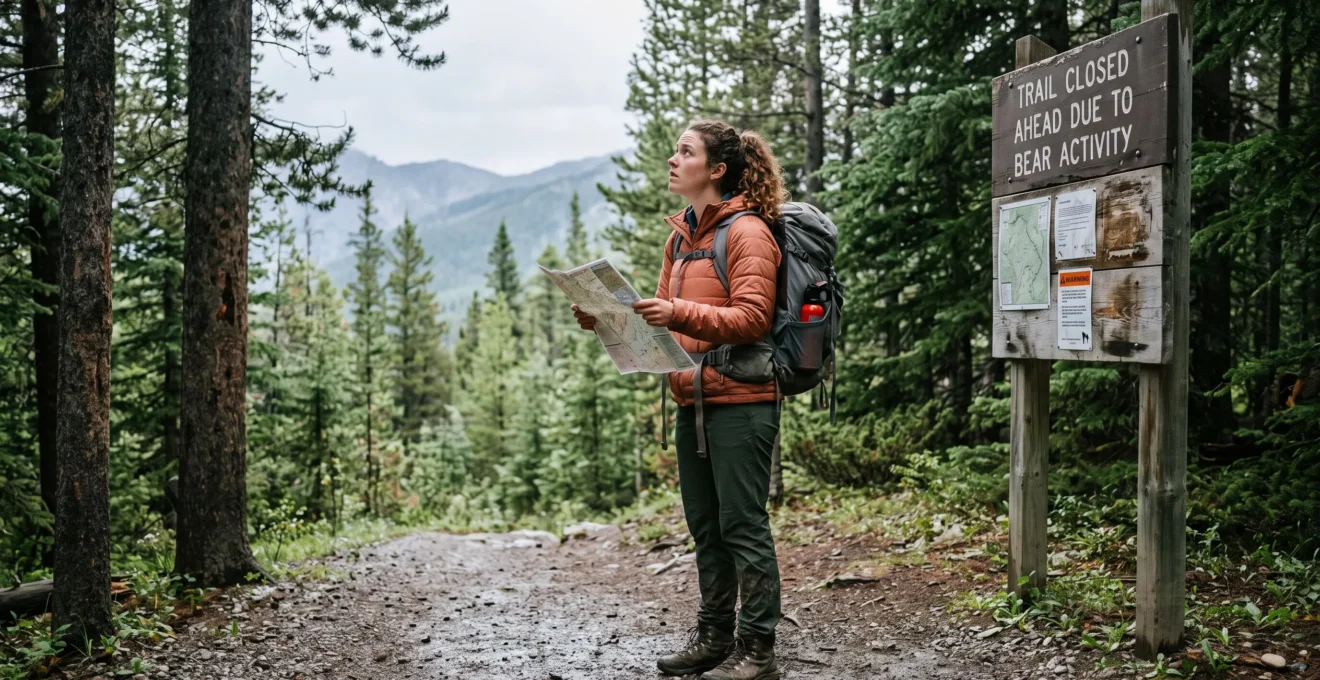
A Canadian park getaway can unravel before the first hike. A trail closes because of bear activity, wildfire smoke makes outdoor exercise uncomfortable, or a family arrives at a popular trailhead only to discover that parking requires an advance reservation.
These problems are not always predictable, but many are manageable. The most reliable approach is to check official park conditions, confirm access requirements, and prepare an alternative itinerary before leaving home. Weather forecasts matter, but they are only one part of the decision.
For families planning a weekend in a national or provincial park, a good itinerary also accounts for driving time, children’s abilities, food storage, seasonal insects, accommodation flexibility and cancellation rules. A shorter, accessible trail with a reliable backup may deliver a better experience than an ambitious hike with no alternatives.
The objective is not to eliminate every uncertainty. It is to make sure that a closure, change in conditions or unexpected expense does not automatically ruin the trip.
Canadian park trip planning at a glance
- Check official park alerts, trail restrictions, fire bans and local air quality shortly before departure and again on arrival.
- Confirm campsite, shuttle, parking and day-use reservations before committing to an itinerary.
- Keep a feasible backup route, follow wildlife and food-storage rules, and choose accommodation that matches your tolerance for uncertainty.
- Why Do Canadian Parks Close Trails So Often Even When The Forecast Looks Fine?
- How to Plan a Canadian Park Day Trip With a Backup Plan in 25 Minutes?
- Which Is Easier in Canada: Camping in a Park or Staying Nearby and Doing Day Hikes?
- The Wildlife Mistake Canadians Make in Parks That Can Get You Fined and Put Animals at Risk
- When Should You Visit Canadian Parks to Avoid Crowds and Peak Mosquito Season?
- Why Do Some “Green” Habits in Canada Do Almost Nothing Compared to One Local Action?
- Why Do International Festivals in Canada Feel More Expensive Every Year Even When They’re “Public”?
- Is Domestic Tourism in Canada Worth It When Flights Cost $800 CAD for a Family of Four?
Why Do Canadian Parks Close Trails So Often Even When The Forecast Looks Fine?
Canadian parks close trails for reasons that may have little to do with the day’s weather. Wildlife activity, wildfire danger, avalanche conditions, infrastructure damage, maintenance and habitat protection can all restrict access. A sunny forecast does not mean a trail is safe or open. Official park notices are more reliable than weather apps for determining whether visitors can proceed.
A mountain trail might remain closed after a storm because its bridges or drainage infrastructure are damaged. A forest route may be restricted to protect wildlife, while a higher-elevation path could carry avalanche hazards despite pleasant conditions at the nearest town.
According to Parks Canada’s ten rules for a responsible visit, temporary restrictions may involve fire danger, construction, maintenance, avalanche risks and other safety or conservation concerns.
These restrictions should not be interpreted as interchangeable. Visitors need to distinguish among three situations:
- Park-wide closure: access to the affected park or designated portion is prohibited under the applicable notice.
- Trail or area closure: a particular route, campground or zone is unavailable, but other areas may remain accessible.
- Advisory or warning: a hazard has been identified, but the notice must be read carefully to determine whether access remains permitted and under what conditions.
The precise wording and legal effect depend on the park authority. Parks Canada, provincial agencies and territorial authorities operate under different rules, so a warning should never be assumed to have the same meaning everywhere.
For national parks, consult the destination’s Parks Canada advisories and visitor information. Provincial visitors should use the relevant authority’s alerts, such as Ontario Parks or Alberta Parks, alongside local trail information where available. Local hiking organizations can provide useful observations, but they do not override official closures.
Checking once when making a reservation is insufficient. Conditions can change between booking and arrival, and a new restriction may affect only one part of the itinerary.
Closures can also affect prepaid travel expenses. Under Parks Canada’s reservation and cancellation policies, affected frontcountry campsite reservations are cancelled with all paid fees refunded, including service fees, when Parks Canada closes the campsite or campground. However, cancelling voluntarily before an official closure is announced remains subject to regular cancellation provisions.
Backcountry bookings, guided activities, roofed accommodation, provincial parks and privately booked lodging may have different terms. A closure does not automatically guarantee reimbursement of every related travel expense.
A weather app tells visitors what the atmosphere might do. A park alert tells them which activities remain available. Both are necessary, and the next step is turning those checks into a practical itinerary.
How to Plan a Canadian Park Day Trip With a Backup Plan in 25 Minutes?
Plan a Canadian park day trip by dividing 25 minutes among five checks: park restrictions, route conditions, localized weather and air quality, access reservations, and alternative destinations. The result should be one realistic primary activity and two workable alternatives. Repeat critical checks before leaving because a valid plan can become unsafe or inaccessible overnight.
The key is to make decisions before reaching the trailhead, when finding another activity may require significant driving or unreliable mobile coverage.
A practical time allocation is five minutes per check:
- Minutes 0–5: read official park alerts, closure notices and applicable fire bans.
- Minutes 5–10: verify the selected trail’s status, difficulty, expected duration and available daylight.
- Minutes 10–15: compare the specific destination’s mountain, coastal or marine forecast with local air-quality information.
- Minutes 15–20: confirm parking, shuttle, entrance and other reservation requirements.
- Minutes 20–25: select two alternative activities and establish clear conditions for switching plans.
The best backup is not necessarily the nearest trail. Ideally, it is reachable without a major detour and has a different exposure profile. A sheltered low-elevation walk may remain suitable when strong winds make a mountain ridge impractical. Conversely, a sheltered forest route is not automatically safe during flooding, high fire danger or severe smoke.
For a hypothetical family travelling toward the Rockies, Plan A could be a higher-elevation hike, Plan B a shorter officially open forest trail, and Plan C a nearby indoor visitor experience. All three should be checked independently for accessibility and suitability.
Wildfire smoke deserves particular attention. Health Canada‘s wildfire smoke and health information explains that fine particulate matter is a significant health concern and that smoke can affect air quality far from active fires, even when it is not obvious to the senses.
Check the Air Quality Health Index (AQHI), or the applicable local air-quality reporting system, rather than relying on sunshine or visibility. Children, older adults and people with respiratory or cardiovascular conditions may require greater precautions. A change of destination only helps if conditions are actually better there.
Finally, confirm access reservations. Some busy destinations require advance booking for specific shuttles or parking facilities. An open trail does not guarantee that a visitor can reach it using their preferred transport.
Your 25-minute park departure checklist
- Open the official park notices and record the current access status for your destination.
- Check the intended trail and save its route, estimated duration and latest available conditions.
- Review localized weather and air quality; write down the condition that would trigger cancellation or a change of activity.
- Confirm all required access bookings and save reservation details for offline use.
- Choose two verified alternatives and save their locations, driving directions and access requirements.
Once the day’s activities have viable alternatives, the next major decision is where to sleep. Accommodation determines how easily the group can respond if conditions change overnight.
Which Is Easier in Canada: Camping in a Park or Staying Nearby and Doing Day Hikes?
Staying near a park and taking day hikes is generally simpler for first-time visitors who want predictable sleeping conditions and less equipment. Camping can reduce daily travel and provide a closer outdoor experience, but adds reservation complexity, food-storage responsibilities and overnight weather exposure. The better choice depends on availability, budget, experience and how easily plans can change.
Accommodation affects more than comfort. It changes departure times, food preparation, transportation costs and the consequences of a campsite or trail closure.
For families, these trade-offs are often more important than the apparent nightly price.
| Decision factor | Camping inside the park | Nearby accommodation with day hikes |
|---|---|---|
| Booking | May require advance reservations during competitive release periods | Subject to accommodation availability and local demand |
| Equipment | Tent, sleeping equipment, cooking supplies or rentals may be necessary | Usually requires less specialized overnight equipment |
| Weather exposure | Greater overnight exposure to temperature, rain and wind | More predictable shelter, depending on the property |
| Trail access | Can reduce travel time to nearby trailheads | May involve early departures and additional driving |
| Closure flexibility | Depends on whether the campground, access roads or trails are affected | May allow easier substitution of nearby destinations |
| Cost considerations | Camping fees, reservation charges, equipment, supplies and park admission | Room charges, transport, meals and applicable park fees |
Reservation timing may settle the choice before personal preference does. Parks Canada’s reservation launch dates show that booking schedules differ by destination and reservation category.
For the 2026 visitor season, separate launches applied to campgrounds, backcountry accommodation, shuttles and certain parking facilities. Some high-demand release periods used an online queue. This does not mean every campground sells out immediately, but it makes early preparation particularly important for popular dates.
Nearby hotels, cabins and vacation rentals present a different challenge: they can be expensive or unavailable during busy periods. Their cancellation terms also vary by provider.
Camping has another advantage that is easy to overlook. Staying close to the trail system can simplify early starts, especially when popular parking areas or shuttle services have limited capacity.
However, campers must be ready for nighttime conditions, proper food storage and campground-specific rules. Families with young children may find that the additional equipment and routine outweigh the convenience of proximity.
A hybrid itinerary offers a useful compromise: spend one or two nights camping, then use nearby accommodation for the remaining nights. It allows a group to experience camping without making every day dependent on campsite conditions.
For example, a hypothetical three-night getaway could include one campground night and two nights in town, with day hikes chosen according to current conditions. The approach may cost more than camping throughout, but could reduce the consequences of poor overnight weather.
Whichever option is chosen, food management becomes an essential part of the itinerary. Wildlife safety rules apply to daytime visitors as well as overnight campers.
The Wildlife Mistake Canadians Make in Parks That Can Get You Fined and Put Animals at Risk
Feeding wildlife or leaving food accessible is a serious and avoidable mistake in Canadian parks. Even small food scraps can encourage animals to associate people with easy meals. This increases the risk of dangerous encounters, may lead to enforcement action and can result in restrictions or wildlife-management interventions. The safest approach is to keep food secured and never encourage an animal to approach.
Visitors sometimes assume that feeding a squirrel or chipmunk is harmless compared with attracting a bear. Yet the underlying problem is similar: human food changes how wildlife interacts with people.
Food-conditioned animals may repeatedly approach picnic areas, campsites and vehicles. Over time, those interactions can create safety problems for visitors and animals.
Parks Canada prohibits feeding wildlife and leaving attractants accessible in the places it administers. Violations can carry penalties under applicable park regulations. Enforcement procedures and penalties vary across federal, provincial and territorial jurisdictions.
Proper storage involves more than closing a picnic basket. Food, coolers, garbage, cooking supplies and toiletries may all attract animals.
Use designated bear-resistant lockers where provided, or another storage method expressly permitted by the park. Secure storage inside a closed vehicle may be appropriate where park rules allow it. In backcountry settings, approved bear-resistant containers, designated storage systems or properly constructed bear hangs may be required or recommended depending on the destination.
A bear hang is not a universal solution. Some parks specify different food-storage methods, and an improvised hang may not meet local requirements.
Wildlife viewing also requires distance. Parks may publish species-specific minimum distances, especially for bears, wolves, elk and other large animals. Visitors should follow the destination’s instructions rather than treating a single national distance as universally applicable.
When an animal approaches, do not move closer for a photograph or offer food to distract it. Give it space, avoid blocking its escape route, and follow local species-specific safety advice. Report hazardous encounters to park staff when appropriate.
Roadside wildlife viewing can create another hazard. Stopping unsafely, obstructing traffic or forming a wildlife jam places animals, motorists and other visitors at risk.
Pets require equal attention. Dogs can disturb wildlife or provoke defensive behaviour, even when they appear friendly. Follow leash requirements and check whether pets are permitted on a specific trail.
Bear spray may be recommended for particular destinations and conditions, but it is not subject to one universal carry requirement across every Canadian park. Visitors should confirm the relevant rules, learn how to use approved equipment safely and check transportation requirements, especially when travelling by air.
Wildlife encounters are not the only seasonal factor that affects comfort. The timing of a visit also influences crowds, insects and the suitability of individual routes.
When Should You Visit Canadian Parks to Avoid Crowds and Peak Mosquito Season?
There is no single month when Canadian parks are both consistently quiet and free of biting insects. Early-season visits may avoid some summer crowds but can coincide with mosquitoes and blackflies, while later visits may bring different insect conditions and heavier demand. The best dates depend on the province, elevation, habitat, weather and the priorities of the people travelling.
Canada’s geography makes generalized insect calendars unreliable. A boreal forest campground, an alpine trail and a windy coastal route can have very different conditions during the same week.
Mosquitoes often benefit from suitable breeding habitats and seasonal moisture. Blackfly activity also depends on local conditions, including waterways and species-specific life cycles. Neither group follows a uniform national schedule.
Start with the intended park rather than the province as a whole. Look for recent visitor information, local park guidance and observations about seasonal standing water, insect activity and trail exposure.
Historic patterns can help with planning, but they cannot guarantee conditions for a future weekend. Recent weather may change the experience substantially.
Several crowd-management strategies remain useful regardless of insect season:
- Choose weekdays when possible instead of popular holiday weekends.
- Consider less-famous parks or secondary trail systems near major destinations.
- Use official booking systems to identify available access periods.
- Plan an early start when appropriate for trail conditions, daylight and reservation rules.
- Keep a shorter alternative route available if a busy trailhead is already at capacity.
Families should also distinguish between solitude and comfort. A quiet forest route during a period of intense biting-insect activity may be less enjoyable for young children than a busier, more exposed trail later in the season.
Conversely, experienced visitors prioritizing solitude may accept extra insect protection in exchange for fewer encounters with other hikers.
A useful packing strategy includes appropriate insect repellent used according to its label, protective clothing and head nets where necessary. For younger children, check the product’s age-specific directions and applicable health guidance.
Choosing the right dates also requires considering conditions unrelated to insects: lingering snow, seasonal road access, wildfire risk, shortened daylight and local wildlife restrictions.
Once dates are selected, responsible behaviour matters as much as good timing. Visitors can reduce damage to sensitive landscapes without buying specialized environmentally marketed equipment.
Why Do Some “Green” Habits in Canada Do Almost Nothing Compared to One Local Action?
Some environmentally marketed travel habits have limited practical value when they distract from direct impacts at the destination. In Canadian parks, respecting trail boundaries, closures, food-storage rules and fire restrictions can immediately prevent damage to habitats and wildlife. Reusable gear can still be useful, but buying new products is not a substitute for responsible behaviour on the ground.
A visitor may purchase a new eco-labelled backpack, reusable food containers and specialized outdoor accessories while overlooking the simple requirement to remain on designated trails.
That trade-off can be counterproductive if the visit causes avoidable environmental damage.
Off-trail shortcuts can damage vegetation and encourage others to follow the same route. Repeated passage may create informal trails, sometimes called trail braiding, and increase erosion in vulnerable areas.
Alpine vegetation and wetland habitats can be particularly sensitive to disturbance. Recovery depends on local conditions and may be slow where soils or plant communities are fragile.
Wildlife protection creates a similar challenge. Entering a restricted nesting, denning or seasonal habitat area may undermine measures intended to reduce disturbance.
For a family weekend, meaningful low-impact behaviour is relatively straightforward:
- Stay on designated routes and respect barriers, signs and closures.
- Take all garbage and leftover food out of the natural environment.
- Secure wildlife attractants during meals and overnight stays.
- Use fires only where permitted and comply with current fire bans.
- Keep appropriate distances from wildlife and avoid disturbing sensitive habitats.
These actions align with established responsible-visitor principles. They should be incorporated into trip preparation rather than treated as optional environmental extras.
That does not prove that on-site behaviour quantitatively outweighs every sustainable purchasing decision. Environmental impacts vary by activity, product and duration of use, and a complete comparison would require evidence about each choice.
The practical lesson is narrower and more useful: buying environmentally marketed equipment does not neutralize the consequences of ignoring park restrictions.
Using equipment that is already functional, borrowing supplies where practical and avoiding unnecessary purchases can complement careful conduct during the visit.
Responsible preparation can also protect the trip budget. This becomes particularly important when a park getaway is combined with a scheduled festival or other ticketed activity.
Why Do International Festivals in Canada Feel More Expensive Every Year Even When They’re “Public”?
A public festival in Canada is not necessarily free, and its total cost can extend well beyond admission. Families may pay for transport, accommodation, parking, meals and optional programming. When a festival coincides with a busy park weekend, limited availability can further complicate the budget. However, whether prices are actually rising each year must be established for the particular event.
The distinction between public access and free admission matters. An event may welcome the general public while charging for specific performances, facilities, workshops or experiences.
Similarly, some park interpretation activities or special events require advance registration or payment, while other visitor experiences are included with applicable admission or offered without an additional charge.
For families combining a park visit with an event, the largest expense may be the surrounding trip rather than the festival ticket itself.
Consider a hypothetical weekend built around a cultural festival in a gateway community. The family may need accommodation for two nights, meals away from home, parking, event admission and park access.
If the preferred accommodation is unavailable, switching to a more distant property could add driving time and fuel expenses. If the park closes an intended trail, the event remains fixed on the calendar even though the outdoor itinerary changes.
This is why festival-based park trips require two separate decisions: whether the event is worth attending and whether the surrounding itinerary still makes sense if outdoor plans fail.
Before booking, compare:
- The total event cost, including paid activities and transportation.
- Accommodation availability and cancellation conditions.
- Park admission and any reservation requirements.
- Free or lower-cost interpretation programs offered at the destination.
- Alternative activities if weather or closures affect the park visit.
Free interpretive walks or children’s discovery activities may provide a worthwhile alternative where offered. However, availability, admission arrangements and age suitability should be checked with the specific park.
Ticket refunds also deserve attention. There is no universal rule establishing that all festival tickets are non-refundable. Terms depend on the organizer and circumstances, so visitors should examine cancellation and postponement policies before purchasing.
The same caution applies to booking dates. Festival tickets, park reservations and hotel inventory may be released on different schedules; assuming a coordinated launch can lead to missed opportunities.
An event can justify additional spending when it provides a distinctive experience. But the broader question remains whether a Canadian getaway delivers enough value relative to the cost of transportation, accommodation and activities.
Key takeaways before choosing your travel budget
- Compare complete itineraries, not just transport prices: both flying and driving create costs beyond the initial fare or fuel estimate.
- Separate fixed commitments from flexible spending. Non-refundable reservations and expensive equipment can increase the cost of changing plans.
- Choose the destination for an experience your family values, then test whether that experience remains worthwhile if one planned activity becomes unavailable.
Is Domestic Tourism in Canada Worth It When Flights Cost $800 CAD for a Family of Four?
Domestic tourism can be worth the money for a Canadian family, but an $800 CAD flight estimate is only one part of the comparison. A drivable park holiday may cost less when transport, camping and meals are considered together. Flying can still offer better value when the destination is too distant to reach comfortably by road or provides an experience unavailable nearby.
The useful comparison is not simply airfare versus gasoline. It is the complete cost of two realistic holidays that provide comparable enjoyment and fit the family’s available time.
For a hypothetical family of four considering $800 CAD in total airfare, the flight-based budget might include:
- $800 CAD in assumed return airfare for the family, if that is the actual fare available.
- Airport transportation and any baggage charges.
- Accommodation and meals at the destination.
- Rental transportation or other local travel expenses.
- Park admission, activities and reservation charges.
The $800 figure is a hypothetical comparison input, not a verified nationwide airfare average or a guaranteed bookable price.
A driving holiday has a different cost structure: fuel, possible tolls or parking, camping or accommodation, food, admission and equipment. A longer trip may also entail additional vehicle wear and maintenance costs.
For a family that already owns camping equipment, using existing supplies may make a nearby park trip comparatively affordable. For first-time campers, purchasing a tent, sleeping equipment and cooking supplies can change the calculation substantially.
Equipment may provide value across future trips, but its eventual cost per use depends on how often the family actually camps. Renting or borrowing can help test that preference before making major purchases.
A simple budgeting method is to create two complete estimates using the same trip duration:
Total driving-trip cost = fuel + transportation-related expenses + accommodation or camping + food + park fees + equipment or rentals + paid activities.
Total flying-trip cost = airfare + baggage and airport transfers + destination transportation + accommodation + food + park fees + paid activities.
Include applicable taxes and booking charges where they are not already reflected in quoted prices. Avoid counting the same expense twice.
Time matters as well. A long drive can consume a substantial share of a short weekend, particularly with young children. A relatively inexpensive airfare may offer value when it preserves more time at the destination, although airport logistics and schedules must also be considered.
Some destinations offer experiences that cannot be replicated by choosing the nearest national park. Remote Arctic landscapes, distinctive coastal ecosystems and island environments can justify more complex travel for visitors who specifically value them. Access to some remote parks may require transportation arrangements beyond ordinary commercial flights or driving.
The final decision should also account for flexibility. A cheaper itinerary with rigid cancellation terms may become expensive if a major closure prevents the intended activity.
Likewise, paying more for a destination with several suitable alternatives may make sense for a family seeking a predictable holiday.
Choose a reachable park, confirm its current restrictions, price the complete itinerary and save a backup activity before paying non-refundable costs. A Canadian park trip delivers better value when the family can still enjoy it even if the original hike does not go ahead.
How far in advance should you check Canadian park closures?
Check official restrictions when selecting the destination, again before committing to significant expenses, and once more on departure morning. Review trailhead signage and park staff instructions on arrival. Conditions and restrictions may change between these checks.
Can you enter a Canadian national park without a camping reservation?
Often, yes, because day-use access and overnight camping reservations are different arrangements. However, specific destinations may require advance reservations for parking, shuttles or certain activities. Confirm current access requirements and applicable admission fees for the exact destination.
What should you do when wildfire smoke affects a planned hike?
Review the local AQHI or applicable air-quality alerts, consider each participant’s health risks, and reduce or reschedule strenuous outdoor activity when appropriate. A shorter or lower-elevation hike is not necessarily safer if the smoke exposure remains similar. An indoor alternative may be more suitable.
Does a park closure automatically qualify you for a camping refund?
Not automatically in every situation. Parks Canada’s published policies provide full refunds, including service fees, for affected frontcountry reservations cancelled because Parks Canada closes the campsite or campground. Voluntary cancellations before an official closure and other booking categories may follow different provisions. Provincial and private operators set their own terms.
What information should a family save offline before visiting a remote park?
Save maps, booking confirmations, route descriptions, alternative destinations, emergency contact information and relevant safety instructions. Tell a trusted person the intended route and return plans. Offline information supplements, but does not replace, current official notices, appropriate equipment and the ability to respond to changing conditions.