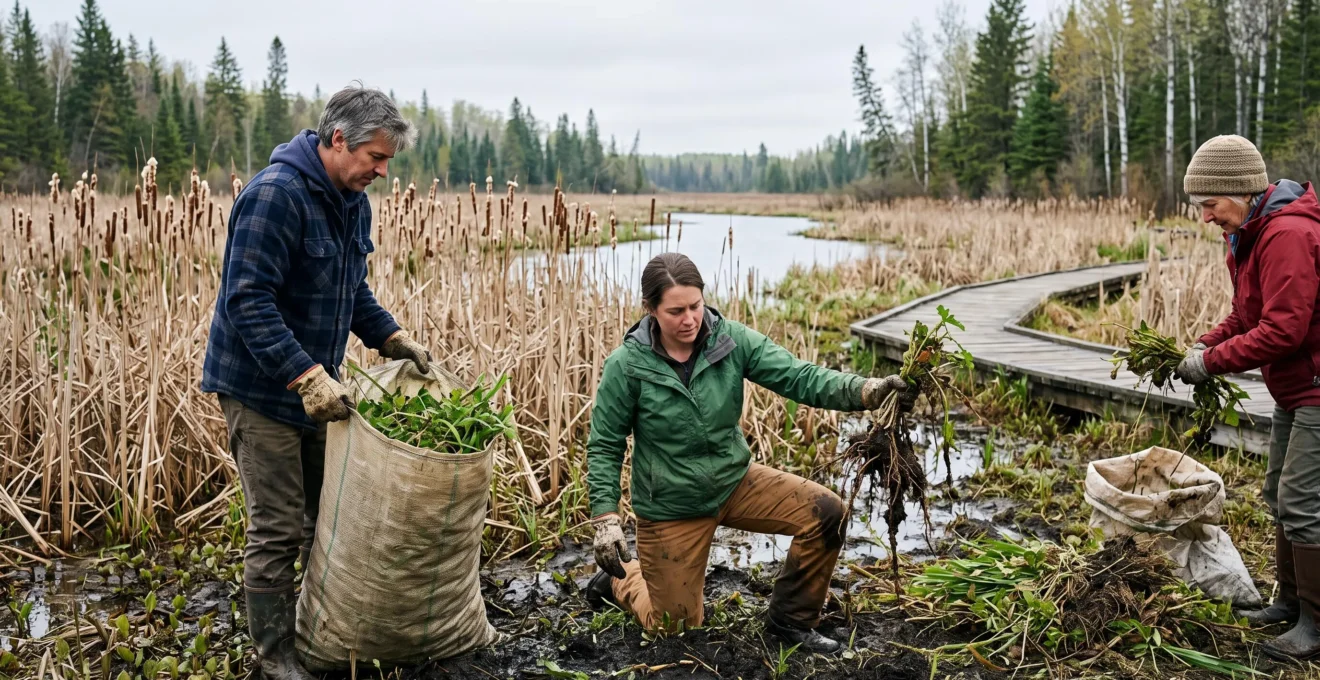
Supporting environmental conservation in Canada does not require another monthly donation, an expensive outdoor hobby, or a complete lifestyle overhaul. You can make a practical contribution by helping remove invasive plants, recording wildlife observations, joining an organized shoreline cleanup, or simply avoiding activities that damage protected habitats.
The challenge is choosing something that delivers a useful result without becoming another obligation. Canada’s conservation needs vary considerably between coastal ecosystems, Prairie wetlands, boreal forests, mountain parks, and urban natural areas. An activity that makes sense in one region or season may be unavailable or inappropriate elsewhere.
The most sustainable starting point is to find one local need, match it to your schedule, and identify how the organization tracks contributions. Even occasional participation can be worthwhile when it supports a coordinated conservation program. The goal is not to do everything for nature. It is to do something useful, responsibly, and consistently enough that you can keep going.
Conservation in Canada: what matters most
- Choose one organized local activity with a clear purpose and a way to record the work completed, rather than accumulating unrelated environmental commitments.
- Match volunteering to your travel time, preferred tasks, and seasonal availability. Citizen science and one-day events offer different levels of flexibility.
- Protect sensitive habitats during ordinary outdoor activities by respecting designated trails, wildlife restrictions, and official park closure notices.
- Why Do Some “Green” Habits in Canada Do Almost Nothing Compared to One Local Action?
- How to Pick One Conservation Action in Canada You Can Stick With for 6 Months?
- Which Fits Better in Canada: Monthly Citizen Science or One-Day Cleanup Events?
- The Well-Meaning Outdoor Habit That Damages Sensitive Canadian Habitats
- When Should You Volunteer for Conservation in Canada to Make the Biggest Difference?
- Why Do Canadian Parks Close Trails So Often Even When The Forecast Looks Fine?
- The Well-Meaning Outdoor Habit That Damages Sensitive Canadian Habitats
- How Do You Plan a Canadian Park Trip Without Getting Surprised by Closures and Weather?
Why Do Some “Green” Habits in Canada Do Almost Nothing Compared to One Local Action?
Some everyday environmental habits produce benefits that are difficult to connect to the condition of a particular Canadian ecosystem. A coordinated local conservation activity, by contrast, can generate an identifiable output, such as invasive plants removed or wildlife observations recorded. That does not mean reusable bags or shorter showers are worthless. They address different environmental problems, and their effects should not be compared without evidence.
Reducing household consumption generally focuses on your personal environmental footprint. Using less water, avoiding unnecessary waste, and reusing products can reduce demand for resources. Their effectiveness depends on factors such as local water conditions, energy sources, consumption patterns, and how consistently the behaviour is adopted.
Conservation volunteering takes another approach: it contributes directly to the management or understanding of a shared natural resource.
| Decision factor | Personal footprint reduction | Local conservation participation |
|---|---|---|
| Main purpose | Reduce resource consumption or waste | Protect, monitor, or restore a specific natural area or species |
| Example | Reduce unnecessary household water use | Help remove an identified invasive plant under supervision |
| Visible result | Changes in personal consumption, where tracked | Completed tasks or recorded observations |
| Key limitation | Does not necessarily address a local habitat problem | Ecological benefits depend on project design and follow-through |
Consider a wetland where an organization is coordinating invasive plant management. A volunteer who follows its instructions may contribute to a documented control effort. The ecological benefit is not automatically equivalent to the number of plants pulled: correct identification, disposal, repeat treatment, and subsequent monitoring all matter.
Parks Canada’s conservation participation opportunities include wildlife observations, citizen science, environmental monitoring, and shoreline cleanup activities. Some programs ask participants to record their work so the information can support broader conservation efforts.
There is also a practical reason to focus. Trying to maintain a long list of small lifestyle commitments can create unnecessary mental overhead, particularly when the results feel invisible. Concentrating your volunteering on one specific activity makes it easier to recognize what you contributed and decide whether to continue.
This is a planning advantage, not proof that one volunteer hour always produces a greater environmental benefit than a household behaviour change. Both approaches can complement each other.
A strong conservation commitment begins with a specific local need, not a contest over which environmental action sounds most impressive. The next decision is whether that action fits comfortably into your life.
How to Pick One Conservation Action in Canada You Can Stick With for 6 Months?
Choose a six-month conservation commitment by checking three things: how easily you can reach the activity, whether its seasonal schedule matches your availability, and whether you actually enjoy the work. Then confirm the organization’s training and supervision arrangements. A short trial is more useful than promising six months of participation before understanding what the role involves.
Start with logistics rather than enthusiasm alone. A project may be important, but travelling across your region for every session can make participation difficult. Travel time is worth treating as a major personal constraint, even though the available sources do not establish it as the leading cause of volunteer dropout.
Use three questions to narrow your options:
- Distance: Can you reach the site without disrupting your usual schedule or spending more on transportation than you are comfortable with?
- Season: Does the activity operate throughout your intended six months, or only during a particular monitoring or fieldwork window?
- Work style: Would you rather work outdoors, identify species, record observations, organize equipment, enter data, or help with community outreach?
A real Canadian example shows why these details matter. The Prince Albert National Park volunteer programs include Adopt-a-Patch, which involves controlling invasive plants during summer. Parks Canada provides identification and safety training, after which participants can work independently in their adopted area and report their activities.
That structure may suit someone who enjoys outdoor work and prefers flexible scheduling. It will be less practical for someone who lives far away or cannot participate during summer. The same park also describes seasonal bird-monitoring opportunities, demonstrating that different conservation roles can have very different schedules.
Before committing, ask the organization who trains new volunteers, who answers questions afterward, how attendance works, and whether individual work is permitted. Do not assume a role is flexible simply because it is unpaid.
Your five-step conservation commitment checklist
- Identify one conservation issue near home and write a one-sentence goal, such as participating in a supervised invasive plant management project.
- Shortlist two suitable organizations and record their locations, travel requirements, and relevant activity seasons.
- Contact each organization to confirm training, supervision, scheduling, and reporting expectations; save the answers.
- Arrange two or three trial sessions, where available, and keep a simple note of travel time, tasks completed, and how the experience felt.
- Select one realistic commitment and create a six-month calendar with participation dates and a monthly review reminder.
The trial period is a practical recommendation rather than a research-established ideal. Some programs require training before participation, while others may offer only occasional events.
Six months should be a useful planning horizon, not a test of dedication. If the activity does not suit your circumstances, choosing a different format is more constructive than abandoning conservation altogether.
Which Fits Better in Canada: Monthly Citizen Science or One-Day Cleanup Events?
Monthly citizen science is usually a better fit if you enjoy observing nature, following a consistent method, and contributing records over time. One-day cleanup events suit people who prefer hands-on group activities with a defined beginning and end. Neither format is universally more effective: the conservation value depends on the program’s objectives, data quality, and how the results are used.
Citizen science involves members of the public contributing observations or measurements to an organized project. In Canada, opportunities can involve recording birds, identifying plants, observing environmental changes, or monitoring aquatic ecosystems.
Cleanups generally focus on removing litter from shorelines, trails, or other managed areas. Some also collect structured information about the waste removed, meaning the results can extend beyond the immediate physical cleanup.
| Factor | Monthly citizen science | One-day cleanup events |
|---|---|---|
| Commitment | Recurring observations or assigned monitoring sessions | Usually a defined event or scheduled session |
| Typical outputs | Species records, survey results, or environmental measurements | Collected litter and, when recorded, waste observations |
| Training | Varies by project; some monitoring requires specific methods | Often includes event-specific safety and handling instructions |
| Seasonality | May follow breeding, migration, or other monitoring periods | Depends on access, weather, and organizer scheduling |
| Best suited to | People who enjoy observation and structured reporting | People seeking a finite, social, hands-on activity |
The important distinction is not simply whether one activity generates data. It is whether the program has a clear way to use the output.
Structured biodiversity observations submitted through platforms such as iNaturalist can increase the information available about species and their distribution. However, individual records vary in quality and do not automatically become research findings or policy decisions.
Similarly, a shoreline cleanup may produce both an immediate removal result and information about pollution. Parks Canada describes activities where participants record the litter they collect to help investigate pollution sources.
A useful progression is to start with an organized cleanup, meet local coordinators, and learn how the organization works. If the experience is positive, ask whether it operates a recurring monitoring program that fits your schedule.
Hypothetical example: finding a sustainable format
A resident of a Canadian coastal community joins a Saturday shoreline cleanup. Afterward, the organizer explains how collected litter is categorized and recorded. The resident decides that monthly observation and reporting work would suit their schedule better than frequent group events.
This is an illustrative participation pathway, not a documented outcome from a particular Canadian program.
Alternating formats can also work. Someone might join a summer cleanup and contribute occasional bird observations during an appropriate survey window, without committing to constant fieldwork.
Both approaches become more useful when you follow the organizer’s procedures and report the results accurately. Protecting a site also depends on what you do during ordinary recreational visits, even when you are not volunteering.
The Well-Meaning Outdoor Habit That Damages Sensitive Canadian Habitats
Taking shortcuts off designated trails is a common outdoor behaviour that can damage sensitive habitats, even when the intention is harmless. Walking across fragile vegetation can disturb plants, compact or expose soil, and contribute to erosion. In alpine meadows, dunes, wetland margins, and restoration areas, remaining on established routes is an important conservation action that requires no financial contribution.
The temptation is understandable. A narrow shortcut may appear to save time, provide a better viewpoint, or avoid a muddy section. If someone has already walked there, the route may even look legitimate.
But a visible track is not necessarily an authorized trail.
Vegetation and soil conditions vary across Canadian ecosystems. In places with thin soils, fragile plant communities, or short growing seasons, repeated disturbance can make recovery especially difficult. The available guidance confirms the potential for vegetation damage and erosion but does not establish a universal recovery time for these habitats.
Shortcuts can also create a reinforcing pattern. Once vegetation is worn down, an informal route becomes more visible and may attract additional visitors. As traffic increases, soil exposure and erosion can worsen, potentially widening the affected area.
The practical rule is straightforward: follow designated trails and respect marked restoration areas. Look for official trail markers, boundary stakes, barriers, and posted notices. If a path is unclear, consult the official park map or ask park staff rather than treating a worn track as proof of access.
Parks Canada’s rules for responsible visits explicitly advise visitors to remain on designated paths, protect fragile vegetation, respect closures, and check applicable restrictions.
When a designated route is blocked, do not create your own detour through protected vegetation. Follow an officially authorized alternative or turn back if necessary. A blocked trail may indicate a safety issue or a deliberately protected area.
Restrictions can differ between national parks, provincial parks, municipal conservation lands, and privately managed natural areas. Check the rules established by the authority responsible for the specific site.
Respecting established access routes protects places that conservation volunteers and park staff may already be working to restore. Timing is another way to make any additional volunteer effort more useful.
When Should You Volunteer for Conservation in Canada to Make the Biggest Difference?
The best time to volunteer for conservation in Canada is when a local organization needs help with a specific seasonal task, not necessarily when you have the most free time. Invasive plant management, wildlife surveys, and planting projects can depend on ecological timing. Administrative and data-related activities may offer alternatives outside the main field season.
Canada does not have a single conservation calendar. Activity windows differ according to region, species, climate, elevation, and project methods. A suitable planting period in one province may not be suitable elsewhere, and invasive plant control must match the biology of the species involved.
The following seasonal framework is a planning guide rather than a nationwide schedule.
| Season | Potential activities | What to confirm locally |
|---|---|---|
| Spring | Selected invasive plant work, amphibian monitoring, early-season surveys | Species timing, ground conditions, wildlife protections, and training |
| Summer | Plant management, bird surveys, habitat monitoring, organized cleanups | Survey schedules, heat or smoke conditions, and site access |
| Fall | Regionally appropriate planting, habitat work, selected migration observations | Planting suitability, seasonal closures, and project deadlines |
| Winter | Some wildlife monitoring, data review, preparation, equipment maintenance | Safe access and whether indoor or remote tasks are available |
The Prince Albert National Park programs illustrate why organizers determine the schedule. Its Adopt-a-Patch activities involve several summer visits, while the listed loon survey opportunities take place during June, July, and August. Those dates describe specific programs, not ideal schedules for every conservation project.
In invasive plant management, acting before a target species disperses seeds can be important. However, treatment must follow the coordinator’s identification, safety, and control instructions. Unsupervised removal can damage native vegetation or spread material that should be handled carefully.
For tree planting, cooler fall conditions may suit certain regional projects, but spring can also be appropriate. The right timing depends on the site, plant material, soil conditions, and restoration plan.
Timing also involves the organization’s capacity. Some programs have limited training opportunities or fixed survey dates. Other tasks, such as preparing equipment or organizing existing records, may be available when outdoor opportunities are scarce. Their availability should be confirmed rather than assumed.
A reasonable planning approach is to contact a preferred organization two or three months before the season you hope to participate in. Ask which activities are planned, where additional volunteers would be useful, and whether advance training is required. This lead time is a practical suggestion, not a universal recruitment rule.
The objective is to contribute when the task is appropriate and properly organized. That includes knowing when a site should be left undisturbed, particularly where temporary park restrictions are in effect.
Why Do Canadian Parks Close Trails So Often Even When The Forecast Looks Fine?
Canadian parks may close trails during pleasant weather because access decisions consider much more than rain or temperature. Wildlife activity, fragile ground conditions, avalanche hazards, maintenance, research, restoration, and other safety concerns can all require restrictions. A sunny forecast describes atmospheric conditions; it does not establish that a trail is safe, ecologically appropriate, or officially open.
Consider the difference between what a weather forecast measures and what a park manager must assess. A forecast may indicate clear skies while a trail still contains ice, unstable snow, wet ground, or damaged infrastructure.
Some closures are primarily about visitor safety. Others protect wildlife movement, sensitive habitat, or ongoing ecological work. These purposes can overlap, and they are not always obvious to someone arriving at a trailhead.
For example, access may be restricted to protect a wildlife corridor or reduce disturbance near a sensitive area. Maintenance or restoration work may also require temporary closure even when the path looks physically passable.
One useful reference is Banff National Park’s official trail conditions report. Its October 2026 entries distinguish between specific trail conditions, including snow, ice, slippery surfaces, and access restrictions. It also directs visitors to official bulletins for detailed closure information.
Those updates are examples of how a park reports trail conditions, not permanent statements about access. A route listed as closed or icy in October 2026 may have a different status when a visitor checks it later.
Real example: trail-specific reporting in Banff National Park
Banff’s October 28, 2026 trail reporting identified Johnston Canyon Trail as closed and noted snow or ice on several other routes. Some entries also described wet or slippery surfaces and recommended additional traction equipment.
The documented result is a set of location-specific access and condition updates. The report does not establish why every affected trail was closed or how long any restriction would remain in place.
Understanding this distinction is valuable for conservation participants. A closure may reflect the same habitat protection or monitoring priorities that an organization is asking volunteers to support. It should never be interpreted as permission to enter and assist without authorization.
Before an outing, check the responsible park authority’s website, current trail conditions, and applicable bulletins. If a closure affects your intended destination, choose an open alternative or contact the organization to ask whether another authorized activity is available.
Closures protect both visitors and natural resources. Building flexibility into your plans helps you respect those restrictions without giving up the outdoor experience entirely.
The Well-Meaning Outdoor Habit That Damages Sensitive Canadian Habitats
Allowing a friendly dog to wander off-leash in a sensitive natural area is another well-intentioned habit that can disturb wildlife. A dog does not need to chase or injure an animal to create a problem: its presence and movement may cause wildlife to retreat or interrupt normal behaviour. The safest practical approach is to follow site-specific pet rules and use designated routes.
Outdoor visitors often assume that a calm, familiar pet presents little environmental risk. But wildlife responds to the animal itself, not the owner’s confidence in its temperament.
Ground-nesting birds are particularly relevant because nests and surrounding habitat may be difficult for visitors to recognize. Parks Canada warns that pets can disturb wildlife and damage nests. This is a reason to prevent unsupervised wandering, even when no obvious disturbance is visible.
Off-leash activity can also combine with the damage caused by informal trails. If people and their pets repeatedly enter an area outside a designated route, vegetation and soil can experience additional disturbance. A single visit may seem insignificant, but recurring use can increase pressure on sensitive locations.
The precise ecological consequences depend on the habitat, wildlife present, visitor intensity, and actual behaviour. It would be misleading to assume that every dog produces the same disturbance or that every site has identical restrictions.
There is no need to abandon outdoor recreation to reduce these risks. Instead, make three adjustments:
- Check pet access before travelling. Some trails and protected areas have specific restrictions, and not every route permits dogs.
- Use a leash where required. Follow the responsible authority’s rules and keep your pet on designated routes rather than allowing it to investigate sensitive vegetation.
- Choose appropriate recreation areas. If your preferred activity requires more freedom for your pet, find a location where that activity is expressly permitted.
The same principle applies to people without pets: enjoying nature does not require entering every accessible-looking space. Designated paths and restrictions help concentrate recreation where it can be managed.
This is particularly important during sensitive wildlife periods or restoration work. Posted restrictions should take priority over assumptions based on past visits.
Responsible recreation is a form of conservation participation in its own right. The final practical challenge is combining those habits with a reliable method for checking park access before you leave home.
Key takeaways before your next park visit
- Official closure notices take priority over forecasts, past experience, and unofficial trail recommendations.
- Choose alternatives that remain within authorized access areas rather than creating shortcuts around restrictions.
- A useful backup plan considers trail conditions, wildlife rules, and any required reservations, not just the distance to another destination.
How Do You Plan a Canadian Park Trip Without Getting Surprised by Closures and Weather?
Plan a Canadian park trip by checking the official destination website, current closures, trail-specific conditions, seasonal access, and any reservation requirements before leaving. Then prepare an alternative route or destination in the same region. Weather forecasts remain useful, but they cannot replace official information about snow, ice, wildlife restrictions, or maintenance-related closures.
Start with the authority responsible for your intended park. National, provincial, municipal, and conservation authority sites may publish information differently, so make sure the notices apply to the exact location and trail you plan to visit.
Use the following sequence when preparing an outing:
- Identify the official park information page. Confirm that it belongs to the agency managing your destination, rather than relying only on a map listing or travel blog.
- Review closures and restrictions. Look for current bulletins, trail-specific notices, wildlife restrictions, restoration zones, and other access limitations.
- Check seasonal access. Confirm whether roads, trailheads, visitor facilities, or specific routes are operating during your planned visit.
- Review trail conditions and the forecast separately. Look for reported snow, ice, mud, slippery surfaces, or other hazards that may remain after the weather improves.
- Confirm reservation requirements. Check whether the destination requires advance booking, a permit, a day-use pass, or another form of admission authorization.
- Choose backup options. Identify two or three appropriate alternatives in the same region and verify their access conditions independently.
The backup options should offer genuinely different possibilities rather than repeating the same exposure to a problem. For example, if a higher-elevation route is affected by lingering snow, a lower-elevation designated trail may be more suitable, provided its current conditions and regulations allow access.
Similarly, if a sensitive habitat is closed for wildlife protection, an alternative should avoid that restricted area rather than approach it from another trailhead.
Recent visitor photographs can provide additional context about surface conditions, but they have limitations. Images may be outdated, show only part of a route, or omit hazards. They should supplement official reports, not override them.
For a concrete example of the difference between forecasts and access information, Banff’s trail reporting includes conditions that may be very different across individual routes within the same park. This is why a general forecast for a nearby town or park entrance cannot establish the suitability of a specific hike.
On the morning of your visit, check for updates again. If access is uncertain, contact the park or visitor centre using its published contact details. Avoid assuming that yesterday’s information is still accurate.
Conservation-minded planning also means accepting a changed itinerary. Turning back from a restricted trail, choosing an authorized alternative, or postponing a visit can protect wildlife and fragile terrain without ending your connection to nature.
For your next outing, identify one park, verify its current access information, and save an approved backup route. Then consider contacting a local conservation program about one manageable volunteer opportunity. Those two small decisions create a practical starting point for supporting Canadian nature without another monthly payment.
Can you help conserve nature in Canada without paying a membership fee?
Yes. Conservation participation can include citizen science, wildlife observations, organized cleanups, and approved habitat management activities without requiring a recurring donation. Costs and participation conditions vary by program, however. Travel, equipment, admission, or other expenses may still apply, so confirm requirements before registering.
Do you need scientific training to participate in citizen science?
Not always. Some programs accept observations from members of the public, while others require training in species identification, survey methods, safety, or reporting. The appropriate starting point depends on the project. Follow its instructions and do not submit uncertain observations as confirmed identifications.
Can conservation volunteering be done remotely in Canada?
Some organizations may offer activities involving data entry, administration, outreach, or review of existing observations. These opportunities should be confirmed directly with the organization. Not every conservation program has remote positions, and some monitoring work necessarily requires visits to a specific site.
Should you remove an invasive plant if you recognize it while hiking?
Do not assume removal is appropriate. Plant identification can be difficult, and pulling or transporting material without instructions may harm native species, interfere with management work, or spread seeds or plant fragments. Report the observation through an appropriate program or ask the managing authority whether removal is authorized.
How can you tell whether your conservation volunteering is making a difference?
Ask what the organization records and how it evaluates progress. Useful outputs may include completed monitoring visits, documented species observations, treated areas, or properly recorded cleanup results. These show what volunteers contributed, but they are not automatically proof of long-term ecological improvement. Reliable outcome assessment may require repeated monitoring and professional evaluation.