A friendly Canadian colleague says, “We should get coffee sometime.” Three weeks later, nothing has happened. Was that an invitation, a polite expression of goodwill, or a gentle way to end the conversation?
In Canada’s diverse workplaces and neighbourhoods, everyday etiquette is shaped by people with different communication styles, languages, personal boundaries and expectations about friendship. A gesture that feels welcoming to one person may seem distant or intrusive to another. Even people who grew up in Canada do not necessarily interpret the same signals in the same way.
The most useful approach is to treat etiquette as a conversation rather than a fixed national rule. Ask when intentions are unclear, respect individual preferences, and build familiarity through repeated interactions.
Whether you’re arriving in Canada, moving between provinces or getting to know neighbours from different backgrounds, a few practical habits can prevent misunderstandings while making connections more natural.
Canadian etiquette at a glance
- Clarify rather than guess: Polite language, hesitation and indirect feedback can mean different things depending on the person and setting.
- Build connections through consistency: Regular participation in community activities creates more opportunities for familiarity than occasional introductions alone.
- Adapt to people, not stereotypes: Language preferences, workplace expectations and regional traditions vary across Canada.
- Why Do Misunderstandings Happen More Often in Canada Even When Everyone Is Being Polite?
- How to Address a Cultural Misunderstanding at Work in Canada Without Making It Awkward?
- Which Works Better in Canada: Joining One Community Group or Rotating Between Several?
- The Over-Apology Habit That Makes You Seem Less Trustworthy in Canadian Group Settings
- In What Order Should You Build Your Social Circle in Canada During Your First 90 Days?
- Why Does Canada Have Official Bilingualism if Most People Use One Language Daily?
- Why Do Canadian Traditions Look Different in the Prairies vs Atlantic Canada but Still Feel Familiar?
- How Do You Build Real Community Ties in Canada When You’re New and Everyone Is Busy?
Why Do Misunderstandings Happen More Often in Canada Even When Everyone Is Being Polite?
Misunderstandings can occur in Canadian communities because polite behaviour does not always communicate intentions explicitly. People may soften disagreements, avoid personal questions or leave invitations open-ended to respect another person’s autonomy. When neighbours or colleagues interpret those signals through different cultural expectations, both sides can believe they are being considerate while understanding the interaction differently.
Consider a hypothetical workplace exchange. A colleague suggests changing the schedule, and another replies, “That might be difficult.” One person hears a problem that needs solving. The other intended to express reluctance without giving a direct refusal.
Such ambiguity is possible in many cultures, not uniquely Canadian. And a Canadian speaker’s “yes” should not automatically be treated as a disguised “no.” Tone, hesitation, timing and follow-up matter more than nationality.
Three different sources of misunderstanding deserve different responses:
- Communication style: One person values direct disagreement; another prefers softened language. Ask, “Would you rather I give you a direct answer?”
- Hierarchy: Someone expects managers to make decisions, while a colleague expects everyone to contribute. Clarify who decides and how feedback should be offered.
- Unspoken social expectations: A neighbour expects spontaneous visits; another prefers advance notice. Discuss practical preferences instead of assuming the relationship lacks warmth.
The expression “to each their own” can also cause confusion. Respecting another person’s choices might feel like indifference to someone who associates friendship with active involvement.
When someone says they enjoy hiking but never invites you, try a specific proposal: “There’s a trail walk on Saturday morning. Would you like to join?” A concrete invitation distinguishes an unexpressed opportunity from a lack of interest without putting pressure on the other person.
Small talk requires similar judgment. Questions about weather, hobbies or local activities are generally safer starting points than questions about salary, religion, marital status or immigration history. If someone gives brief answers, looks away repeatedly or stops asking questions, consider changing the subject. These are possible signs of discomfort, not definitive evidence.
Curiosity becomes more useful when paired with restraint. Ask what someone prefers, listen to the answer and allow individual behaviour to outweigh cultural assumptions. That same principle is especially important when a misunderstanding happens at work.
How to Address a Cultural Misunderstanding at Work in Canada Without Making It Awkward?
Address a workplace cultural misunderstanding by discussing the specific behaviour and its effect rather than assigning motives or blaming someone’s background. When appropriate, arrange a private conversation, describe what happened, invite the other person’s perspective and agree on a practical adjustment. If the incident involves harassment, discrimination or continuing harm, use the applicable workplace reporting and resolution process.
For ordinary communication problems, begin with something observable: “During yesterday’s meeting, I felt interrupted before I finished explaining the proposal.” This is more constructive than claiming, “You don’t respect how we communicate here.”
Canadian federal workplace guidance supports distinguishing impact from intention, listening without judgment and recognizing differences in verbal and nonverbal communication. The Department of National Defence workplace harassment prevention toolkit also emphasizes confidentiality and appropriate resolution procedures. Its guidance concerns Defence Team workplaces rather than establishing universal rules for every Canadian employer.
A practical conversation can follow four steps:
- Choose the appropriate setting. For a minor misunderstanding, a private conversation can reduce defensiveness. Serious misconduct may require a formal channel instead.
- Describe the impact. Explain the words or behaviour that caused the problem without declaring what the person intended.
- Invite clarification. Ask how the other person understood the exchange and listen without immediately arguing.
- Agree on an adjustment. Decide what both people can do differently in future interactions.
These hypothetical examples illustrate how the approach can sound in practice:
- A colleague felt criticized: “I think my comment came across more sharply than I intended. I was questioning the timeline, not your ability. How did it sound to you?”
- A joke caused discomfort: “That joke didn’t land the way I expected. I can see it may have made the meeting uncomfortable. I won’t repeat it.”
- An email sounded hostile: “My message was brief because I was rushing, but I realize the wording sounded abrupt. Could we clarify the next steps together?”
Some teams prefer direct feedback, while others soften criticism with positive comments. The familiar “feedback sandwich” is one possible technique, not a guaranteed Canadian convention. Clear, respectful feedback is usually more valuable than a formula that obscures the actual concern.
Publicly highlighting a colleague’s cultural background, even jokingly, can intensify embarrassment and reinforce stereotypes. However, privacy should not become a reason to conceal misconduct. If behaviour is repeated, affects performance assessments, involves a power imbalance or raises discrimination or harassment concerns, consult the supervisor, human resources team, union representative where applicable, or the appropriate reporting process.
Successful repair does not require everyone to communicate identically. It requires shared expectations about respectful behaviour, accountability and how concerns will be handled. Outside work, building this familiarity often begins in community groups.
Which Works Better in Canada: Joining One Community Group or Rotating Between Several?
For building lasting relationships in Canada, a combination of exploration and regular participation is a practical choice. Visiting several groups helps you discover where you feel comfortable, while returning consistently to one or two creates opportunities for people to recognize you and develop trust. Neither approach guarantees friendship, and the best balance depends on your interests, schedule and local opportunities.
Canadian newcomers can find social connections through neighbourhood organizations, libraries, sports teams, cultural associations and volunteer programs. Immigration, Refugees and Citizenship Canada‘s community connections resources for newcomers identify these activities as practical ways to meet people and participate locally.
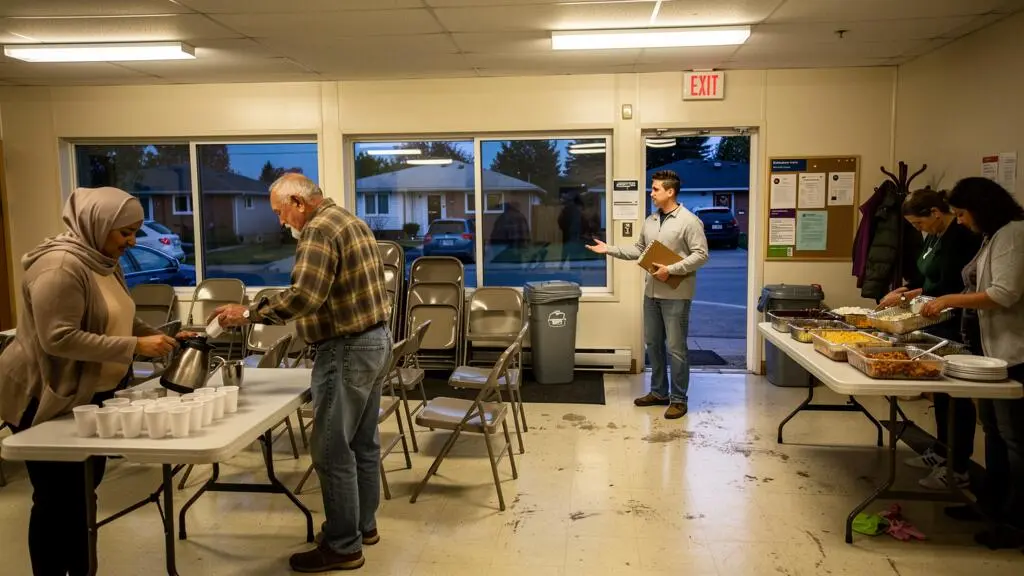
Consider two hypothetical newcomers. One visits a different social event every weekend and meets many people once. The other attends the same weekly community kitchen, gradually remembers people’s names and begins having conversations beyond the task. The second arrangement offers more repeated contact, although either approach could lead to meaningful relationships.
The following comparison can help you decide where to invest your time.
| Decision factor | One recurring group | Several different groups |
|---|---|---|
| Primary benefit | Repeated contact and familiarity | Exploration and varied introductions |
| Social experience | More opportunities to deepen existing conversations | More opportunities to discover shared interests |
| Main limitation | Potentially narrow social exposure | Less continuity with individual members |
| Practical fit | People ready to commit regularly | People still exploring their options |
A workable hybrid sequence is to explore two or three settings over your first few weeks, then choose one regular activity and, if your schedule permits, a second group with a different mix of participants.
Look for signs that a group deserves continued attention: people recognize you, conversations become more personal, you enjoy the activity itself, and participating fits comfortably into your routine. If the setting remains unwelcoming or exhausting, changing groups is reasonable.
A cultural or language-based community can provide essential emotional support and belonging. There is no evidence in the supplied settlement resources that participation in such groups inherently delays integration. The practical opportunity is to maintain those relationships while also meeting people through shared local interests, neighbourhood activities or mixed community settings.
A good community strategy leaves room for both familiarity and discovery. Once you begin attending regularly, the way you communicate in those groups matters as much as the number of activities you join.
The Over-Apology Habit That Makes You Seem Less Trustworthy in Canadian Group Settings
Frequent apologies can sometimes weaken how confidently your message is received, especially when you apologize for ordinary questions, respectful disagreement or simply taking up space. Canadian conversational “sorry” often functions as a courtesy marker rather than an admission of wrongdoing. The goal is not to eliminate apologies, but to distinguish genuine accountability from unnecessary self-effacement.
Imagine a volunteer meeting where someone says, “Sorry, this might be a stupid question, and I’m really sorry to interrupt, but could we check the schedule?” The repeated apologies may distract from a perfectly reasonable request.
Compare that with: “Could we confirm the schedule before everyone signs up?” The second version is clear, courteous and easy to answer.
There are three useful distinctions:
- A genuine apology: “I’m sorry I missed my shift and left you covering the front desk.” This acknowledges a concrete impact.
- A social courtesy: “Sorry, could I get past you?” This helps manage a small interruption or inconvenience.
- A request opener: “Sorry, quick question.” This may be harmless, but repeating it before every contribution can make the request seem unnecessarily tentative.
More effective wording is often simple. Replace “Sorry to bother you” with “Thanks for taking a moment.” Instead of “Sorry, I disagree,” try “I see it differently because…” And rather than apologizing for asking someone to repeat an unfamiliar expression, say, “Could you explain what that means?”
These changes are communication options, not proof that apologizing makes someone untrustworthy. People interpret apologies differently, and factors such as language confidence, disability, gender expectations and workplace power dynamics can influence how comfortable someone feels speaking directly.
When an error genuinely affects someone, however, confidence means taking responsibility rather than avoiding an apology. A useful apology identifies the action, acknowledges its impact and explains the repair: “I’m sorry I sent the wrong meeting time. You made an unnecessary trip. I’ve corrected the invitation and will confirm details earlier next time.”
Repeated apologies without changed behaviour may frustrate others more than the original mistake. A specific repair gives the apology substance.
The objective is respectful participation, not perfect wording. Clear requests, genuine apologies and reliable follow-through make it easier for others to understand you as relationships develop over time.
In What Order Should You Build Your Social Circle in Canada During Your First 90 Days?
During your first 90 days in a Canadian community, begin with people you naturally encounter, add a recurring shared activity, and then develop selected connections into friendships beyond those settings. This sequence reduces the pressure of meeting strangers from scratch. It is a practical planning framework, not a scientifically established integration timetable, and individual circumstances may require a different order.
The first stage involves structural connections: neighbours, colleagues, classmates, parents at school, building staff or people at the same local shops. These contacts are accessible because everyday routines bring people together.
During approximately the first month, focus on recognizing faces, introducing yourself and understanding local routines. Mentioning that you’re new can provide an easy conversational opening: “I recently moved to the neighbourhood. Is there a community activity you’d recommend?”
The opportunity to mention being new does not disappear after a few weeks. Relationships can begin at any point, and there is no fixed deadline for making a first impression.
In the following weeks, introduce one regular commitment: a recreational league, a library conversation group, a community garden or a volunteer shift. Consistency gives acquaintances a reason to speak again without needing to organize a separate meeting.
By the final stage, focus on people with whom mutual interest is developing. Move from a greeting to a conversation about shared interests, then suggest a specific activity outside the usual setting. An invitation should be easy to accept or decline.
Your practical five-step community connection checklist
- Identify three everyday places where you repeatedly see people. Create a short list with their names or locations.
- Introduce yourself to two people and remember one non-sensitive detail from each conversation. Record two useful conversation starters.
- Attend two or three local activities and compare their atmosphere, accessibility and scheduling. Write a brief preference note.
- Choose one activity you can attend regularly. Add your next participation date to your calendar.
- Invite one acquaintance to a specific low-pressure activity. Record whether the invitation was accepted, declined or left open, and respect the response.
Progress is better measured by relationship quality than by contact counts. Recognizing someone, exchanging a personal story and choosing to spend time together are separate milestones. Not every acquaintance needs to become a friend.
90%
Share of surveyed newcomers who reported a sense of belonging to Canada in IRCC’s 2025 Settlement Outcomes Report. This describes surveyed newcomer experiences, not the proportion who formed close friendships within their first 90 days.
Support from family, established friends or people who share your language and cultural background can remain central throughout this process. Expanding your circle should add opportunities, not require abandoning relationships that already provide stability.
A growing social circle can make an unfamiliar place feel more comfortable, but understanding local communication also involves language. In Canada, the relationship between English, French and everyday interaction deserves particular attention.
Why Does Canada Have Official Bilingualism if Most People Use One Language Daily?
Canada has two official languages, English and French, because its federal institutions have legal responsibilities concerning both languages. That does not mean every Canadian must speak both. Daily language use varies substantially by region and community, while particular federal positions and services have language requirements. Understanding this distinction helps newcomers choose an appropriate language without assuming everyone is personally bilingual.
Institutional bilingualism and individual bilingualism serve different purposes. Federal language obligations concern government operations and access to services, whereas people generally organize their personal conversations around the languages they know and those used locally.
In federal hiring, the Public Service Commission distinguishes positions requiring English, French or both. Bilingual positions may specify different proficiency levels for reading, writing and oral communication. These requirements depend on the position’s responsibilities and should not be generalized to all Canadian jobs.
Canada’s linguistic geography also matters. French occupies a central place in Quebec’s public life, New Brunswick is officially bilingual at the provincial level, and francophone communities exist throughout the country, including Ontario, Manitoba and other provinces and territories.
English-French bilingualism should not obscure Canada’s wider linguistic diversity. Indigenous languages and languages brought by immigrants are part of daily life in many communities. Official-language policy does not mean these languages lack cultural importance.
In everyday settings, the simplest etiquette is to avoid treating language choice as a test of identity. If you’re uncertain which language someone prefers, ask politely.
- “Would you prefer English or French?”
- “Bonjour! Is English okay?”
- “I’m still learning French. Would you mind speaking a little more slowly?”
- “I’m more comfortable speaking French, if that works for you.”
At a federal service counter, language choice may be governed by service obligations. In a private business or neighbourhood conversation, what is available and appropriate depends on the setting, local law and the people involved.
Language skills can also have practical professional value, particularly for positions requiring service in both official languages. However, not every role requires bilingualism, and knowing two languages does not automatically qualify someone for a particular position.
Respectful language switching is a small but powerful accommodation. Regional traditions introduce another layer of variation, reminding newcomers that Canadian identity is not expressed identically from coast to coast.
Why Do Canadian Traditions Look Different in the Prairies vs Atlantic Canada but Still Feel Familiar?
Canadian traditions differ between the Prairies and Atlantic Canada because communities have distinct histories, landscapes, industries, migration patterns and cultural influences. Yet many share familiar occasions for gathering, including holidays, sports events and seasonal celebrations. What creates continuity is not identical customs but the opportunity to participate in local community life while respecting differences.
In parts of the Prairies, agricultural fairs, community sporting events and rodeos are recognizable elements of local cultural life. Alberta’s Calgary Stampede is a prominent example of western heritage and festival culture, although it does not represent everyone’s interests or traditions.
Atlantic Canada’s cultural landscape includes coastal festivals, fishing-community celebrations, music gatherings and kitchen parties, particularly associated with parts of the Maritimes and Newfoundland and Labrador. These events draw on distinct regional histories rather than one uniform Atlantic identity.
Hockey can provide a familiar reference across many regions, especially during important games or local tournaments. However, not everyone follows hockey, and it should never be treated as a requirement for belonging.
Shared dates also acquire different local meanings. Christmas celebrations vary by household, faith and cultural background. Thanksgiving gatherings differ in food and family customs, while the May long weekend may mark the arrival of warmer weather, outdoor activities or seasonal work.
In some fishing communities, a blessing of the fleet or similar ceremony reflects maritime traditions. Elsewhere, winter carnivals, cultural festivals, farmers’ markets or school sporting events may have stronger local significance. Participation and meanings depend on the community.
For newcomers, local etiquette is easier to understand through observation than through broad stereotypes. Examine municipal event calendars, notice which activities recur, and ask open-ended questions such as, “What events do people in this town look forward to every year?”
Weather is another accessible conversation topic, but its significance changes with the region and season. Discussing snow removal, storm preparations or a sunny weekend may open a conversation without assuming shared cultural experience.
Invitations can vary too. In one neighbourhood, residents may organize activities informally; in another, social gatherings may depend on established clubs or advance planning. Rather than assuming a regional personality, follow the host’s cues about timing, what to bring and whether an invitation includes other household members.
Potential community anchors include recreation centres, festivals, cultural associations, faith communities, sports clubs, business organizations and volunteer groups. None represents every resident, and Indigenous cultural traditions must be approached on their own terms rather than treated as generic regional entertainment.
The most transferable habit is thoughtful participation: show interest without assuming expertise, ask before joining unfamiliar practices and respect that people choose different ways to belong. These habits also help when existing residents appear too busy to socialize.
Key takeaways before building lasting connections
- Availability is not the same as interest. A delayed response may reflect competing commitments rather than rejection; look for reciprocity over time.
- Make the next interaction easy. A specific invitation with a limited time commitment gives another person a clear choice.
- Value mutual effort. Healthy community ties develop when both people have space to initiate, decline and maintain contact.
How Do You Build Real Community Ties in Canada When You’re New and Everyone Is Busy?
Build genuine community ties in Canada by creating regular opportunities to see the same people, making specific low-pressure invitations and following up thoughtfully. Busy schedules and personal boundaries can make spontaneous friendships difficult, but shared activities provide a natural starting point. The strongest approach combines consistency, mutual interest and respect for each person’s availability, without expecting immediate closeness.
A neighbour who declines coffee may have childcare responsibilities, irregular shifts or an already full schedule. The refusal is not automatically a judgment about you. Equally, repeated avoidance without an alternative suggestion may indicate limited interest, which should be respected.
Rather than proposing, “We should hang out sometime,” make an invitation with a clear beginning and end: “I’m going to the community market on Saturday at 10. Would you like to walk around for half an hour? No worries if you’re busy.”
The invitation specifies the activity, time and approximate commitment. It also allows the other person to decline without having to negotiate an open-ended obligation.
Different social environments offer different opportunities. Workplace relationships can develop through shared tasks but may remain professionally bounded. Sports, classes and neighbourhood clubs create recurring contact around mutual interests. Volunteering adds cooperation and a common purpose, which can make conversation easier.
No supplied evidence establishes that volunteering creates friendships faster than every other activity. What matters is whether people have opportunities for repeated, comfortable interaction and whether both sides want to continue the relationship.
27% vs. 22%
In the newcomer survey findings reported by IRCC in 2025, 27% of surveyed settlement-program clients and 22% of non-clients reported volunteering during the preceding 12 months. These are self-reported participation figures, not evidence that volunteering causes friendships or greater belonging.
Immigration, Refugees and Citizenship Canada, 2025 Settlement Outcomes Report, using the newcomer survey populations covered by the report.
Once a connection develops, follow-up matters. If someone mentions an upcoming exam, a new job or a family visit, remembering the detail can show genuine interest. A brief “How did your interview go?” is often more meaningful than repeated generic greetings, provided the person was comfortable discussing it.
Friendships can become dependable over time, but reliability and loyalty are personal qualities, not guaranteed national traits. Pay attention to whether commitments are kept, whether communication is reciprocal and whether both people respect boundaries.
For someone newly arrived in Canada, community organizations and structured newcomer programs can offer starting points when personal introductions are limited. Eligibility and local availability vary, so the relevant organization should confirm which activities are accessible.
Choose one person you already enjoy speaking with, suggest a small shared activity this week, and leave room for an honest response. Meaningful community ties begin with manageable interactions that both people want to repeat.
Is it rude to ask a Canadian neighbour why they have not invited you over?
It depends on your relationship and how the question is expressed. Asking why someone has not invited you can sound accusatory, particularly if you do not know each other well. A more comfortable alternative is to suggest a specific activity yourself and let the neighbour decide whether to participate. Not every friendly neighbour wants a close friendship.
Should newcomers change their communication style to fit into Canadian workplaces?
Newcomers can benefit from learning workplace expectations without abandoning their personalities or cultural identities. Asking how feedback, meetings and decisions are handled is more reliable than trying to imitate an assumed Canadian style. Adaptation should also be reciprocal: employers and colleagues have responsibilities to communicate respectfully and address workplace concerns appropriately.
How can you join a Canadian community activity if you do not know anyone?
Choose an activity that welcomes individual participants, such as a library program, community-centre class, volunteer opportunity or recreational group. Contact the organizer to ask about registration, accessibility, costs and whether beginners are welcome. Introduce yourself to the organizer when you arrive and focus on the activity rather than trying to meet everyone immediately.
Is speaking only English enough to participate in Canadian community life?
English can support participation in many Canadian communities, but the language environment depends on where you live. French is particularly important in many Quebec settings and francophone communities elsewhere, while other languages also play significant roles. Language expectations for particular jobs and services may differ from those for informal social activities. Learning common local expressions and asking about language preferences can make interactions easier.
What if a community group does not feel welcoming after several visits?
Consider whether the problem is an unfamiliar group routine, a communication misunderstanding or repeated exclusion. You can ask an organizer how newcomers typically get involved or try a different role within the group. If the environment remains uncomfortable or discriminatory, you do not need to continue attending. Finding a community that respects you is more important than maintaining attendance in an unsuitable setting.