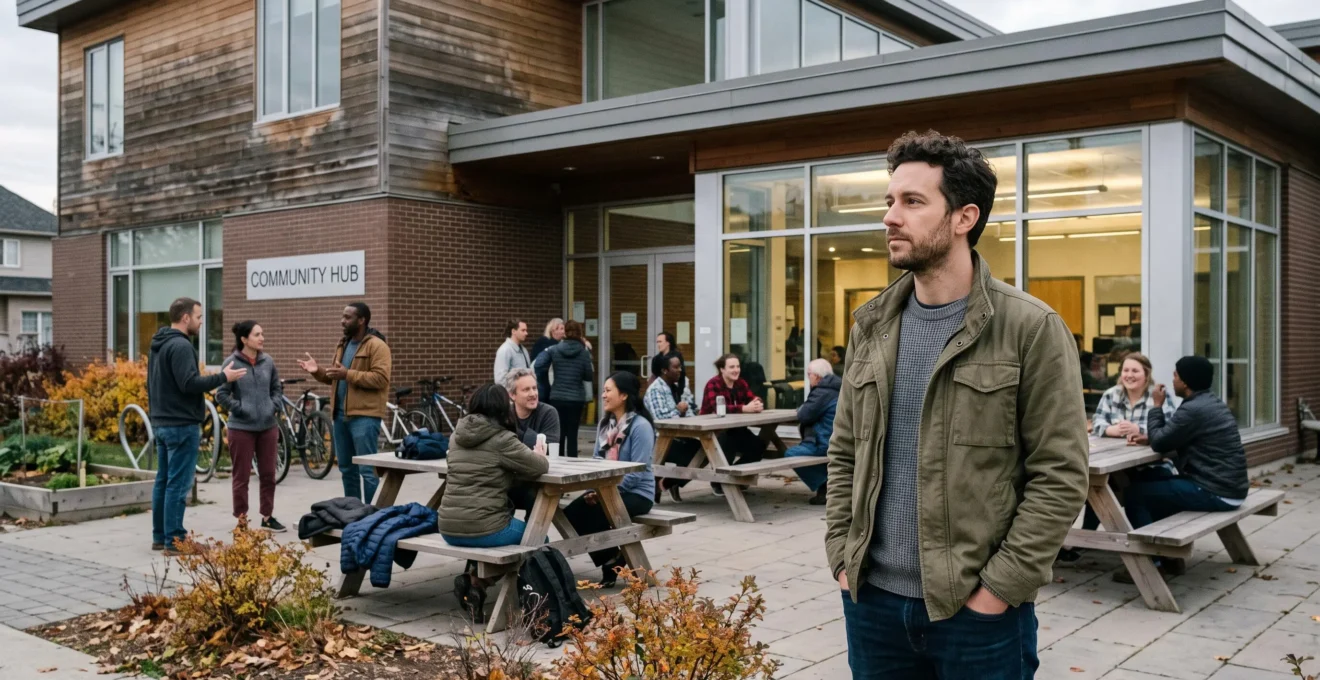
Building real community ties in Canada starts with a simple shift: stop trying to meet as many people as possible and start creating regular opportunities to see the same people. A weekly activity, a familiar neighbour or a standing coffee invitation can gradually become the foundation of a local support network.
Moving to a new Canadian city can feel surprisingly lonely. People may be friendly at work, helpful in shops and welcoming at community events, yet difficult to connect with beyond those settings. Busy schedules, established social circles and long winter months can make casual conversations feel like they never go anywhere.
That experience is understandable in a country where everyday social contact has changed. Statistics Canada‘s time-use research documents a long-term decline in the proportion of people seeing friends on an average day. It does not mean Canadians are unwilling to form new friendships, but it highlights why relying on spontaneous encounters alone may be insufficient.
The practical alternative is to build a manageable social routine: choose places where people return regularly, take small conversational risks, make invitations easy to accept and become someone others can count on seeing again.
Building Community in Canada: The Essentials
- Prioritize repeated contact. One reliable weekly activity usually offers more opportunities to deepen relationships than a constantly changing schedule of events.
- Make friendship invitations manageable. Start with activities people already attend, then gradually suggest more personal time together when interest is mutual.
- Build belonging through participation. Local volunteering, neighbourhood traditions and small recurring commitments can create practical connections alongside friendships.
- Why Does It Take So Long to Make Real Friends in Canada After You Move?
- How to Turn Casual Chats Into Real Friendships in Canada Using a 3-Invite Plan?
- Which Builds Community Faster in Canada: Neighbourhood Events or Hobby Groups?
- The Overcommitment Mistake That Makes Canadians ‘Ghost’ New Communities
- When Should You Start Joining Community Activities in Canada After a Move to Make It Stick?
- Which Works Better in Canada: Joining One Community Group or Rotating Between Several?
- Why Do Canadian Traditions Look Different in the Prairies vs Atlantic Canada but Still Feel Familiar?
- Which Canadian Traditions Help You Feel ‘At Home’ in Your First Winter?
Why Does It Take So Long to Make Real Friends in Canada After You Move?
Making close friends after moving to Canada can take time because friendly interactions and personal relationships develop through different kinds of contact. Meeting someone regularly creates familiarity, but friendship often deepens only when conversations move beyond a shared activity. Busy schedules can make that transition difficult, even when both people genuinely enjoy each other’s company.
Consider two useful categories: activity friends and confidant friends. Activity friends are people you recognize and enjoy seeing at your gym, workplace, language class or children’s activities. Confidant friends are people you can approach when something important happens, whether you need advice, emotional support or simply company.
The difference is not necessarily compatibility. Often, it is the opportunity to spend meaningful time together outside the original setting.
19.3%
The proportion of Canadians who saw friends on an average day in 2022, compared with 47.9% in 1986. These figures describe daily social contact, not the quality of friendships or the experiences of newcomers specifically.
Statistics Canada’s report on time pressure and time spent with friends.
In some Canadian social settings, friendliness coexists with a preference for advance planning and respect for personal space. Someone may enjoy talking with you but hesitate to propose a visit or assume that you already have commitments. These behaviours vary between individuals and communities, so a delayed invitation should not automatically be interpreted as rejection.
Research by Jeffrey A. Hall provides a useful perspective. His United States-based studies found an association between time spent together and friendship closeness, with leisure activities and everyday conversation playing important roles. The findings do not establish a fixed timetable for Canadians, but they support making room for repeated interaction.
Try keeping a simple monthly friendship log. For each promising acquaintance, note how often you meet and approximately how much unstructured time you spend together: walking after class, talking over coffee or chatting without an activity agenda. This is a personal reflection tool, not a scientifically validated friendship predictor.
Pay particular attention when contact becomes spontaneous. Someone messaging you about their weekend or inviting you somewhere without an organized event may indicate growing comfort. It is an encouraging signal, although not a universal milestone.
Instead of trying to become everyone’s close friend, identify one or two acquaintances with whom natural conversation already exists. Creating a little more shared time is often the most realistic next step.
How to Turn Casual Chats Into Real Friendships in Canada Using a 3-Invite Plan?
A practical way to turn casual conversations into friendships is to make three increasingly personal invitations, allowing the other person’s response to guide each step. Begin with a familiar group activity, suggest a relaxed one-on-one meeting when interest develops, and consider a more personal gathering only after mutual comfort is established. The goal is connection, not completing three invitations.
This 3-invite plan is a practical relationship-building framework, not a scientifically tested Canadian social rule. It works as a way to make invitations feel manageable while respecting differences in schedules, preferences and boundaries.
- Invite 1 — Extend an existing activity. Suggest a coffee after your weekly class, a short walk following a volunteer shift or joining others for lunch. The person is already there, so the additional commitment is small.
- Invite 2 — Create a separate meeting. If conversations become comfortable and the first invitation is welcomed, suggest a daytime coffee, a weekend market visit or another shared interest. A small group is also appropriate.
- Invite 3 — Offer a more personal experience. Once the relationship feels reciprocal, suggest dinner, a board-game evening or a gathering at home. An informal public meetup may be preferable if either person would be more comfortable.
Imagine meeting someone at a Tuesday evening recreation program. Instead of proposing a Saturday outing that requires additional travel and planning, ask whether they would like to grab a drink after the next session. If the conversation goes well, a separate meetup may become a natural possibility later.
Interpreting responses requires care. Someone who cannot attend but proposes another date is expressing a potentially useful sign of interest. A vague response without an alternative may indicate low interest, uncertainty or genuine busyness. Rather than assuming rejection, you can extend one more invitation at another appropriate opportunity.
If neither invitation produces a concrete plan or reciprocal effort, give the person space. Do not treat the third invitation as something you are entitled to make. Repeated declines, discomfort or a clear no should always be respected.
Space invitations according to the actual relationship. Three invitations over a short period may feel overwhelming when you have only exchanged a few words. After a warm, extended conversation, however, suggesting another activity can feel entirely natural.
Successful invitations also create room for the other person to initiate. Once both people begin suggesting plans, a casual acquaintance may gradually become part of your everyday social life.
Which Builds Community Faster in Canada: Neighbourhood Events or Hobby Groups?
Recurring hobby groups are generally a more practical starting point when your priority is developing deeper friendships, because they bring you into contact with the same people repeatedly. Neighbourhood events can introduce you to a wider range of nearby residents and local opportunities. Neither is guaranteed to work faster; the better choice depends on whether you want close relationships or broader neighbourhood connections.
Hobby groups have a built-in advantage: conversation does not need to start from nothing. A shared activity gives people something to discuss, and repeated attendance provides opportunities for conversations to continue over time.
Neighbourhood events serve another purpose. A street gathering, community garden project or seasonal celebration can help you discover local organizations and meet residents outside your normal routines.
Use this comparison to decide where to invest your limited time.
| Criterion | Hobby Groups | Neighbourhood Events |
|---|---|---|
| Primary benefit | Developing relationships through shared interests | Discovering nearby people and local opportunities |
| Typical contact | Repeated meetings with familiar participants | Broader contact, sometimes during one-off events |
| Best for | Finding activity partners and potential close friends | Strengthening local identity and practical networks |
| Potential limitation | May connect you with people living across the city | Brief conversations may not lead to follow-up |
| Useful strategy | Attend consistently and invite people to informal meetups | Volunteer, exchange contact details and return regularly |
Some Canadian neighbourhood organizations offer benefits beyond social introductions. In Edmonton, Alberta, community leagues organize recreation and cultural activities, maintain local facilities and advocate for residents. The City of Edmonton’s community leagues information illustrates how neighbourhood involvement can combine social contact with practical participation.
However, Edmonton’s community league model is not identical to neighbourhood organizations throughout Canada. Elsewhere, you may encounter residents’ associations, recreation committees, community centres or locally organized volunteer groups.
A manageable hybrid is to attend one weekly hobby group and participate in two or three neighbourhood events over the year. The hobby group provides continuity; the events help you discover local people and institutions you might otherwise overlook.
Before joining an association, examine what participants actually do. Meetings focused on budgets, governance or advocacy may be valuable for civic involvement but less suited to casual socializing. A volunteer event or recreation program could better match your immediate goal.
Once you have chosen a promising activity, attending regularly matters more than adding numerous alternatives. Too many simultaneous commitments can undermine the consistency that makes community ties possible.
The Overcommitment Mistake That Makes Canadians ‘Ghost’ New Communities
One mistake newcomers can make is joining too many community activities immediately, then disappearing when everyday obligations become overwhelming. This creates a cycle of enthusiastic introductions followed by missed meetings and weakened connections. The solution is to make fewer commitments, attend consistently and communicate clearly when your circumstances change.
Moving brings considerable practical demands. Work schedules, commuting, housing arrangements, childcare and household responsibilities may still be changing. Adding several weekly clubs and volunteer commitments can make an already demanding transition harder.
The initial excitement of meeting new people may hide that problem. You sign up for a running club, a community committee, a language exchange and two social groups, only to realize that your evenings are no longer manageable.
Organizers may interpret unexplained absences as a lack of interest, although they may simply be respecting your time and privacy. This is not a universal Canadian cultural response. Group expectations differ, but repeated unexplained absences can make it harder for others to rely on your participation.
Consistency over coverage is a more sustainable principle.
Before accepting another invitation, estimate your realistic discretionary time after work, travel, essential responsibilities and rest. Then choose one or two recurring activities that fit comfortably within that capacity. This is a suggested planning limit, not a proven maximum.
Your Five-Step Community Commitment Checklist
- Audit your available time. Write down the evenings or weekend periods you can realistically dedicate to community activities; produce a weekly availability map.
- Choose your main commitment. Select one activity with a suitable location, schedule and welcoming atmosphere; save its meeting details in your calendar.
- Set a manageable trial. Identify the next four sessions you could attend; create four calendar entries without sacrificing essential rest or responsibilities.
- Make one follow-up connection. After a promising conversation, suggest a brief activity-related meetup; record the invitation and any agreed plan.
- Review and communicate. At the end of the trial, decide whether to continue, adjust or leave; send a short message if you are withdrawing from an established commitment.
Leaving gracefully matters. You do not need an elaborate explanation. A short message such as “I’ve taken on more than I can manage, so I’m stepping back for now. Thank you for making me welcome” communicates respect without creating unnecessary obligations.
In smaller neighbourhood or cultural communities, participants may be involved in several overlapping groups. Clear communication can help preserve relationships and make returning easier if your schedule improves.
A sustainable commitment gives you a stable base for meeting people. The next decision is when to begin, especially if you arrive during an inconvenient season.
When Should You Start Joining Community Activities in Canada After a Move to Make It Stick?
The best time to join community activities after moving to Canada is when you can participate consistently in a suitable local program. Rather than following a fixed number of days after arrival, consider your household routine and the seasonal calendar. Start exploring immediately, but increase your commitments only when work, transportation and family schedules become manageable.
Canadian community life often follows seasonal patterns. Autumn commonly brings registrations for recreation programs and clubs. Winter encourages indoor activities alongside outdoor sports and festivals, while spring and summer can make informal gatherings easier.
The exact calendar varies by municipality, organization and region. Some programs operate continuously, while others have limited registration windows or require advance enrollment.
A useful first-year strategy is to identify which local activities are about to begin rather than waiting for a supposedly ideal month.
For newcomers who prefer a structured introduction, the following first-90-days plan can help distribute the effort. It is an illustrative planning framework, not an officially established settlement timetable.
- Weeks 1–3: Observe and organize. Find nearby libraries, community centres, recreation programs and local gathering spaces. Check transportation options, program schedules and accessibility.
- Weeks 4–8: Explore gradually. Try approximately one low-commitment activity each week when your schedule permits. Notice which settings encourage relaxed conversation and attract returning participants.
- Weeks 9–12: Build continuity. Keep attending your strongest option. Use a low-pressure invitation to spend a little more time with someone you enjoy meeting.
For newcomers who arrived with stable routines, the process may move faster. Someone managing an unpredictable work schedule or major household transition may need longer. Progress should be measured by sustainable participation, not by a deadline.
Arriving in November or during a harsh winter does not mean putting social life on hold until spring. Libraries, indoor recreation programs, volunteer opportunities and cultural associations can provide useful alternatives when outdoor activities become less convenient.
Immigration, Refugees and Citizenship Canada identifies several ways for newcomers to participate locally, including community centres, libraries, sports clubs and volunteering. Its community connection resources also describe Canada Connects, an initiative that connects eligible newcomers with established community members for regular interaction and guidance.
Eligibility rules for some federally supported newcomer services changed on April 1, 2026. Check current eligibility and availability directly with the relevant service provider before making plans.
Once you are attending activities regularly, assess whether concentrating on one group or exploring several provides the kind of community network you need.
Which Works Better in Canada: Joining One Community Group or Rotating Between Several?
Joining one community group consistently is usually the more practical strategy when your main goal is developing close relationships. Rotating between several groups can help you discover interests, meet different people and build broader networks. A balanced approach is to commit to one promising group while occasionally exploring alternatives, then adjust based on genuine connection rather than novelty.
The distinction is between depth and breadth.
Depth comes from familiarity. When participants see you regularly, they gradually learn your name, interests and communication style. Conversations can move beyond introductions because you already share experiences.
Breadth comes from meeting people across different activities and social circles. These connections may help you discover events, understand your neighbourhood or hear about practical opportunities. Not every useful community relationship needs to become a close friendship.
There is a trade-off. Constantly switching groups can mean repeatedly introducing yourself without staying long enough to establish familiarity. It may also make scheduling difficult, especially in smaller communities where activities depend on volunteers.
A reasonable experiment is to select one primary group and attend for a defined period, such as several consecutive sessions. During that trial, sample another activity occasionally if you have enough energy and time.
Ask yourself two questions before committing further:
- Are conversations extending beyond the scheduled activity? Do people remember previous discussions, stay to chat or show interest in future meetings?
- Do you generally leave feeling engaged rather than drained? Occasional nervousness is normal, but persistent discomfort, poor accessibility or conflicting values may signal a poor fit.
If both answers are positive, maintaining your primary group may be worthwhile. If conversations remain superficial despite repeated attempts, or the activity consistently conflicts with your needs, exploring another group is reasonable.
Leaving an unsuitable community is not a personal failure. A better match may involve different ages, interests, communication styles, cultural backgrounds or meeting arrangements.
For example, someone seeking emotional support might benefit from a smaller recurring discussion group. Someone whose priority is understanding a new city could find more immediate value in volunteering across several neighbourhood projects.
As familiarity grows, you may discover that community groups are also gateways into local traditions, which vary considerably across Canada’s regions.
Why Do Canadian Traditions Look Different in the Prairies vs Atlantic Canada but Still Feel Familiar?
Canadian traditions differ between the Prairies and Atlantic Canada because geography, climate, settlement histories and local cultures shape community life. Yet many gatherings serve similar purposes: bringing people together through shared activities, hospitality and mutual support. Newcomers can participate more easily by identifying what people do together and finding a small, appropriate role within that tradition.
In Prairie communities, recreation centres, outdoor skating rinks, hockey activities and seasonal gatherings can become important meeting places. In some Atlantic Canadian communities, kitchen parties, community suppers, music gatherings and events held in local halls provide opportunities for social connection.
These examples are not universal regional rules. Both regions contain diverse urban, rural, Indigenous, immigrant and longstanding communities, with different traditions and access points. A hockey rink may be central in one neighbourhood and irrelevant in another; a community hall may host several types of events rather than one established tradition.
What matters for newcomers is the social function behind the activity.
A rink gathering may offer a volunteer position, a recurring recreational activity or a chance to help organize a youth program. A community supper might invite people to contribute food, help set up tables or join a planning committee.
In both situations, small participation roles provide opportunities to work alongside others. This may make conversation easier than arriving at a social gathering without knowing anyone.
Seasonal events are particularly useful because they already have organizers, schedules and shared purposes. Fall fairs, winter festivals and neighbourhood celebrations can help you understand which activities residents value and where they gather throughout the year.
If you move frequently between Canadian regions, focus on transferable questions: Where do people gather regularly? Which events welcome volunteers? What responsibilities can a newcomer reasonably take on? Which activities are accessible without special equipment, memberships or personal connections?
You do not need to adopt every local custom. Respectful curiosity, participation and consistency are more useful than trying to imitate an unfamiliar regional identity.
Those traditions become especially valuable during winter, when colder weather and shorter daylight hours can make spontaneous social contact less convenient.
What to Remember Before Your First Canadian Winter
- Choose a winter activity you can return to regularly rather than relying entirely on occasional festivals or holiday gatherings.
- Look for an active role, even a small one, because participating alongside others creates more opportunities for conversation than simply watching.
- Match traditions to your comfort, budget, accessibility needs and household circumstances; belonging does not require adopting every popular Canadian pastime.
Which Canadian Traditions Help You Feel ‘At Home’ in Your First Winter?
Canadian winter traditions can help newcomers feel at home when they create regular opportunities to participate with familiar people. Community skating, winter festivals, neighbourhood meals, library programs and cultural gatherings are all possible starting points. Choose activities you genuinely enjoy, return consistently and take a small role that encourages conversation rather than remaining only an observer.
The first winter can be a difficult social adjustment. Shorter daylight hours, cold weather and transportation challenges may reduce casual outdoor encounters. These effects vary considerably across Canada’s regions, but having dependable indoor or winter-friendly activities can make social participation easier.
Winter traditions offer something useful: an organized reason for people to gather. Instead of needing to create every social occasion yourself, you can join activities that already have a schedule, location and shared purpose.
Consider several practical options according to your circumstances:
- Community skating and rink activities: Potentially suitable for solo adults, couples and families, depending on local programming. Look for beginner-friendly sessions, public skating times or volunteer opportunities. Equipment costs, skating ability and accessibility vary.
- Winter festivals: Useful for exploring local culture and meeting volunteers or organizers. Some events have short volunteer shifts that allow you to contribute without making an ongoing commitment.
- Community suppers and holiday gatherings: Often relevant to individuals and families seeking informal conversation. Libraries, community organizations, faith-based groups and cultural associations may host different types of gatherings, with participation rules varying by event.
- Newcomer and multicultural activities: Potentially valuable for people who want to meet others navigating similar transitions. Some events are open to all residents, while particular settlement programs may have eligibility requirements.
- Winter walking groups or recurring indoor meetups: Accessible alternatives for people who do not enjoy winter sports, subject to weather, transportation and individual mobility needs.
Attending an event can be enjoyable without producing lasting relationships. To create opportunities for future contact, ask an organizer whether help is needed, join a recurring activity or introduce yourself to another participant who also plans to return.
Building a personal tradition can be even more meaningful than attending a large annual celebration. For example, a weekly hot-drink meetup after a recreation class can become a familiar part of winter life. A regular walk with a neighbour or a monthly gathering with acquaintances can serve the same purpose.
The activity itself does not need to be distinctly Canadian. What matters is that it becomes a predictable, shared experience connected to the place where you now live.
Choose one or two realistic traditions rather than filling every winter weekend. If the first activity feels uncomfortable, adjust the setting or try a more accessible alternative. Social belonging develops through meaningful participation, not through completing a checklist of cultural experiences.
Start with one concrete action this week: find a recurring activity nearby, check whether newcomers are welcome and add its next meeting to your calendar. Attend with the aim of learning one person’s name and discovering whether you would enjoy returning. A community begins to feel like home when participation becomes part of your normal life.
Where can newcomers find free or low-cost community activities in Canada?
Start with your municipal library, community centre, recreation department and local volunteer organizations. Some offer free gatherings or subsidized activities, while others charge registration or membership fees. Newcomer settlement organizations may also provide community connection programs, depending on eligibility and availability. Check the current local calendar for costs, transportation requirements and accessible venues.
How can you make friends in Canada if you work irregular hours?
Look for activities with flexible attendance, weekend sessions or multiple meeting times. Instead of committing to an incompatible weekly program, arrange short meetups around recurring windows in your schedule. Volunteering at occasional events or joining a group that accommodates shift workers may provide more realistic opportunities. Communicate your availability clearly so people understand when you can participate.
What should you do if everyone at a community group already knows each other?
Introduce yourself to an organizer and ask how new participants usually get involved. Focus on one or two approachable members rather than trying to enter an entire friendship circle immediately. Helping with a small task can create natural conversations. If the group remains consistently unwelcoming after several reasonable attempts, explore another option rather than assuming the problem is your ability to connect.
Can you build meaningful community ties without speaking perfect English or French?
Yes. Shared activities can create opportunities for connection even when conversation feels challenging. Consider community gardening, creative workshops, recreational sports or volunteer roles with clear tasks. Language conversation groups and multilingual cultural organizations may also help. English and French language needs vary by region and activity, and improving your language confidence can happen alongside developing relationships.
How can you tell whether a new community is becoming part of your life?
Look for practical changes rather than a fixed number of friends. You may begin recognizing familiar faces, having conversations that continue from previous meetings, receiving or making invitations, and feeling comfortable contributing to group activities. These are informal signs of growing belonging, not standardized measures. A smaller network of reliable, reciprocal relationships can be more meaningful than a long contact list.