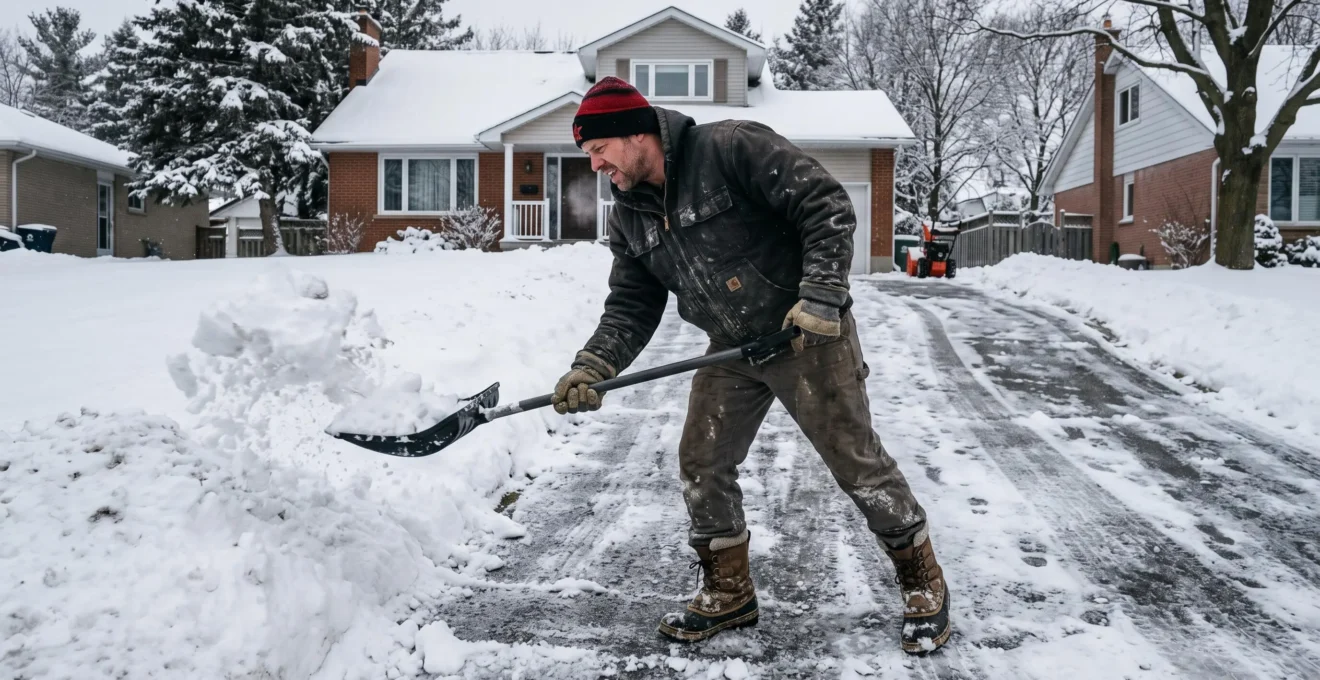
A detached home offers privacy, outdoor space, and freedom from many of the restrictions associated with condominium living. But for Canadian households moving from a condo to a suburban single-family property, the biggest surprise may be neither the mortgage nor the property taxes. It may be the ongoing responsibility for everything outside the front door.
Ten hours of maintenance each month represents 120 hours annually. That is a hypothetical workload, not a measured Canadian homeowner average, but it provides a useful starting point for evaluating the time commitment. Snow clearing, lawn care, drainage inspections, equipment servicing, and contractor coordination can compete directly with evenings, weekends, and family activities.
The financial picture is equally important. A fixed mortgage payment does not fix heating expenses, insurance costs, or emergency repairs. The practical question is whether the additional space and independence justify the combined commitment of money, time, and responsibility.
For a busy household, the answer depends on the property’s condition, local climate, maintenance complexity, and willingness to outsource recurring work.
Detached Home Ownership: What Matters Most
- Budget beyond the mortgage: Heating, insurance, seasonal maintenance, and unexpected repairs need separate allowances.
- Measure your time: Ten monthly maintenance hours would amount to 120 hours annually, before considering major renovations or emergencies.
- Buy for manageable upkeep: A smaller lot, sound drainage, appropriate equipment, and preventive maintenance can matter as much as the purchase price.
- Why Do Single-Family Homes in Canada Cost More in Winter Even if Your Mortgage Is Fixed?
- How to Build a $2,500 CAD Annual Home Maintenance Plan in Canada Without Missing Key Tasks?
- Which Fits a Busy Canadian Household Better: A Detached Home or a Semi-Detached?
- The Snow-and-Drainage Mistake That Can Cost Canadian Homeowners $7,000 CAD in Repairs
- When Should You Book Exterior Home Work in Canada to Avoid Peak-Season Pricing?
- Why Does Clean Tech Perform Differently in Canada at -20°C Than in Milder Countries?
- Which Adds More Resale Value in Canada: Finishing a Basement or Updating a Kitchen?
- Why Do Canadian Property Values Swing So Much Between Neighbourhoods 10 Minutes Apart?
Why Do Single-Family Homes in Canada Cost More in Winter Even if Your Mortgage Is Fixed?
A fixed-rate mortgage makes one part of homeownership predictable, but it does not control winter operating expenses. Canadian detached homes can require additional heating, snow clearing, ice management, and protection against frozen plumbing or drainage problems. Depending on the weather, property design, and available equipment, these obligations increase household spending, unpaid labour, or both.
The distinction is between financing costs and operating costs. The CMHC household budgeting worksheet separates mortgage principal and interest from electricity, heating, property insurance, property taxes, and water expenses. This is a useful foundation for building a realistic detached-home budget.
Insurance premiums are generally billed according to the policy’s payment schedule rather than fluctuating with each snowfall. However, weather-related damage, coverage conditions, and future premium changes remain separate financial considerations. Winter maintenance also creates out-of-pocket expenses that a mortgage calculator cannot predict.
| Expense or task | Financial impact | Time commitment |
|---|---|---|
| Space heating | Seasonal fuel or electricity spending | Monitoring and equipment management |
| Driveway and walkway clearing | Equipment, supplies, or contractor fees | Repeated work after snowfall |
| Ice and drainage monitoring | Preventive supplies or professional assistance | Inspections during changing weather |
| Plumbing protection | Insulation, servicing, or corrective repairs | Preparation and periodic checks |
To estimate a personal winter premium, collect 12 consecutive months of utility bills and maintenance receipts. Compare November through March with the remaining months, adjusting for billing periods and separating genuinely seasonal charges from annual expenses paid during winter.
Then record the hours spent shovelling, managing ice, checking vulnerable areas, and organizing service visits. Give that time a consistent personal value if it helps compare DIY work with outsourcing. This produces a household-specific planning estimate, not a national average.
Once winter variability is visible, the next challenge is turning the entire year of upkeep into a manageable maintenance plan rather than a succession of unplanned chores.
How to Build a $2,500 CAD Annual Home Maintenance Plan in Canada Without Missing Key Tasks?
A $2,500 CAD annual home maintenance plan can work as an initial budgeting exercise, but it is not a verified universal allowance for Canadian detached homes. Start by identifying essential preventive tasks, estimating property-specific service costs, and separating routine spending from a reserve for major repairs. The home’s age, condition, size, construction, and climate should determine whether the allowance is realistic.
For illustration, $2,500 CAD divided across 12 months represents approximately $208.33 CAD in monthly allocations. This arithmetic does not establish that the amount is sufficient. A property with an ageing roof, older heating equipment, or persistent drainage concerns may require substantially different planning.
One common approach is to test a maintenance allowance against a percentage of the property’s value, while also examining the actual age and replacement condition of major components. No single percentage should substitute for an inspection and property-specific estimates.
A practical starting point is a seasonal calendar that concentrates related work into planned sessions.
| Season | Priority tasks | Main objective |
|---|---|---|
| Spring | Inspect foundation, grading, roof condition, and drainage after freeze-thaw | Identify winter-related deterioration |
| Summer | Address exterior repairs, vegetation, paint, and exposed surfaces | Use suitable weather for planned work |
| Fall | Clear drainage systems, prepare equipment, and arrange heating-system service | Reduce preventable winter failures |
| Winter | Clear snow and ice, observe drainage, and monitor vulnerable plumbing | Control weather-related hazards |
Preventing expensive failures takes priority over cosmetic improvement. Roof leaks, foundation water intrusion, plumbing problems, and heating-system faults can affect the home’s usability and require urgent spending. Decorative painting or non-essential landscaping can usually be scheduled after those risks are addressed.
Deciding what to outsource requires more than comparing an hourly contractor quote with the apparent cost of DIY work. Include equipment purchases or rentals, disposal, travel, preparation, safety exposure, and the time necessary to complete the job properly.
Routine ground-level work may be manageable for some homeowners. Electrical repairs, hazardous roof access, complex heating-system work, and significant structural problems warrant appropriately qualified professionals. The safest and most economical choice depends on the actual task.
Create Your Five-Step Maintenance Planning File
- List major home components and their known condition. Deliverable: a dated property maintenance inventory.
- Collect previous utility bills, service records, and inspection findings. Deliverable: a folder of documented ownership expenses.
- Assign preventive tasks to spring, summer, fall, or winter. Deliverable: a 12-month task calendar.
- Mark each task as DIY, contractor, or professional assessment required. Deliverable: a responsibility and safety checklist.
- Compare the $2,500 CAD working allowance with actual quotes and anticipated repairs. Deliverable: a revised annual budget and separate repair-reserve target.
A structured plan also reveals whether the property itself is too demanding for the household’s available time. That question becomes particularly important when choosing between detached and semi-detached housing.
Which Fits a Busy Canadian Household Better: A Detached Home or a Semi-Detached?
A semi-detached home may suit a busy Canadian household better when reduced exterior exposure and a more manageable lot matter more than complete independence. A detached house offers greater separation from neighbours but may bring additional exterior maintenance. Neither format guarantees lower upkeep: building age, property size, construction quality, and shared responsibilities can outweigh the housing label.
The useful comparison is total maintenance surface, not simply interior square footage. A detached house has exterior walls on all sides, while a semi-detached property shares one wall with another dwelling. Depending on the design, that difference may reduce exposed surfaces requiring maintenance or insulation attention.
However, a shared wall does not automatically mean shared roof expenses, unified maintenance schedules, or reduced legal responsibilities. Property boundaries, ownership documents, applicable laws, and any agreements between neighbours determine how particular components are handled.
| Decision factor | Detached home | Semi-detached home |
|---|---|---|
| Exterior exposure | Generally more exposed facades | One shared-wall side |
| Maintenance coordination | Usually more independent | May involve neighbour coordination |
| Privacy and autonomy | Greater physical separation | Shared-wall considerations |
| Outdoor work | Depends on lot size and landscaping | Depends on lot size and landscaping |
| Best household fit | Buyers prioritizing independence | Buyers comfortable with some interdependence |
Price comparisons add another dimension. Statistics Canada’s 2025 New Housing Market Report recorded fourth-quarter average new-home prices of $622,000 CAD for single-detached homes and $466,100 CAD for semi-detached homes in Winnipeg. In Calgary, the corresponding averages were $759,800 CAD and $596,800 CAD.
Those observations concern selected new-housing markets in 2025. They do not compare otherwise identical properties or prove that a shared wall causes a particular price discount. They also do not quantify maintenance-hour savings.
For a household with children and limited weekend availability, compare the actual driveway, lawn, roof, drainage layout, exterior materials, and service history of shortlisted properties. Ask whether a neighbour’s cooperation is required for any anticipated work.
A semi-detached property can reduce certain responsibilities without eliminating them. Whatever the housing format, drainage deserves particular attention because a relatively small maintenance oversight can lead to substantial damage.
The Snow-and-Drainage Mistake That Can Cost Canadian Homeowners $7,000 CAD in Repairs
Piling snow against a home’s foundation while allowing downspouts to discharge nearby can increase the risk of water infiltration during thaw periods. If drainage is obstructed or the ground slopes toward the building, melting snow may collect beside foundation walls. The resulting damage can become expensive, although $7,000 CAD is an illustrative repair scenario, not a verified typical Canadian repair bill.
The problem develops through a connected sequence. Snow accumulates beside the house, temperatures rise, meltwater reaches the ground, and poorly directed runoff remains close to the foundation. Existing cracks, vulnerable openings, or inadequate waterproofing may then permit water to enter.
Subsequent freezing and thawing can create additional stress in susceptible materials or drainage areas. Blocked eavestroughs and downspouts may worsen runoff conditions, especially when water cannot travel away from the building as intended.
The Government of Canada‘s flood-damage prevention checklist recommends regular winter snow and ice clearing, cleaning eavestroughs and downspouts twice annually, and inspecting foundations and property grading each year.
Repair costs depend on the source and extent of the damage. A localized foundation crack repair, restoration of water-damaged interior finishes, and a larger exterior drainage correction are materially different projects. The available evidence does not establish reliable national price ranges for these repairs, so actual estimates should come from qualified local contractors after the cause has been identified.
A hypothetical $7,000 CAD repair could involve multiple corrective and restoration tasks, but it must not be treated as an expected claim amount or contractor quotation.
A short preventive routine is more practical than waiting for visible basement flooding. During thaw conditions, inspect downspout discharge points, look for standing water near the foundation, and check accessible basement walls or windows for new moisture. Keep shovelled snow away from vulnerable openings and direct runoff toward suitable drainage areas without creating hazards for neighbouring properties or public walkways.
Use a ten-minute exterior inspection as a repeatable reminder, not a guarantee that all drainage defects will be detected. Correcting slope, buried drainage, or structural issues may require professional assessment.
Water intrusion also raises insurance and resale questions. Coverage depends on the policy and the event involved. Disclosure obligations depend on applicable provincial law and the circumstances of the property transaction; homeowners should not assume every form of water damage is automatically covered or subject to identical disclosure rules.
Preventive inspections reduce uncertainty, but some corrective work still requires contractors. Scheduling that work intelligently can make ownership more manageable.
When Should You Book Exterior Home Work in Canada to Avoid Peak-Season Pricing?
Canadian homeowners should generally plan non-emergency exterior projects before the local weather-dependent construction season becomes crowded. Roofing, painting, paving, landscaping, and fence work often compete for suitable weather windows. Early planning can improve contractor choice and scheduling flexibility, but lower off-season pricing is not guaranteed, and temperature-sensitive materials may make certain dates unsuitable.
There is no single national contractor calendar. British Columbia’s coastal conditions, Prairie winters, Atlantic weather, and northern construction seasons can create very different opportunities for outdoor work.
Rather than assuming a particular month will be cheaper, use the following calendar as a discussion framework for local quotes.
| Project | Scheduling consideration | Main limitation |
|---|---|---|
| Roofing | Request quotes before the preferred installation period | Weather, roof conditions, and material requirements |
| Exterior painting | Plan around suitable drying and curing conditions | Temperature and moisture restrictions |
| Driveway work | Arrange assessment before the desired construction window | Ground conditions and material specifications |
| Landscaping and fencing | Coordinate design and quotations ahead of installation | Soil conditions, permits, and seasonal access |
| Drainage correction | Inspect early enough to schedule work before predictable risk periods | Urgent defects should not wait for discounts |
For major exterior work, begin contacting contractors several months before the intended start as a planning approach, then confirm actual lead times in your community. The available sources do not support a universal number of weeks for each trade.
Ask contractors to distinguish the earliest available appointment from the earliest technically appropriate installation date. Certain sealants, coatings, and concrete products have temperature and curing requirements that must take precedence over an attractive quote.
Bundling compatible tasks may reduce coordination. For example, exterior inspection findings could be discussed together with proposed gutter repairs and drainage improvements. However, the same contractor may not be qualified or cost-effective for every trade, and bundling does not automatically produce savings.
The benefit for a busy household is partly organizational. Written scopes, scheduled visits, and decisions made in advance reduce repeated contractor calls and last-minute disruptions.
Alongside better scheduling, equipment choices can influence how much attention a detached home requires, particularly when extreme cold affects heating and other household technology.
Why Does Clean Tech Perform Differently in Canada at -20°C Than in Milder Countries?
Clean technology can behave differently at -20°C because low temperatures change heating demand, battery performance, equipment efficiency, and operating conditions. A heat pump may require more electricity to provide the same amount of indoor heat, while cold batteries can face reduced available power or slower charging. Canadian homeowners should evaluate performance at local winter temperatures rather than rely on specifications measured only in mild conditions.
Heat pumps illustrate the distinction between equipment that operates in cold weather and equipment that maintains adequate heating output under those conditions.
Natural Resources Canada‘s February 2023 technical information states that cold-climate air-source heat pumps are designed to work at temperatures as low as -30 °C. It also describes heat pumps as potentially two to three times more efficient than other electric home-heating sources.
These are general technology statements, not guarantees for every installation. They do not establish a particular heat pump’s heating capacity, cost savings, or efficiency at exactly -20°C.
Down to -30°C
Cold-climate air-source heat pumps can be designed to operate at temperatures this low. Operation does not imply identical efficiency or full heating capacity across all models.
Natural Resources Canada, technical information published February 22, 2023.
For an existing detached house, heat-pump suitability also depends on insulation, air leakage, distribution equipment, and the home’s heating load. An installer should assess whether supplementary heating is required and how the system will perform during severe cold.
Battery-based systems require their own cold-weather evaluation. Battery temperature can affect usable capacity and charging behaviour, while equipment controls may limit charging or manage battery temperature to protect the system. Those effects vary by battery chemistry, design, and installation.
Solar panels face a different winter combination: reduced daylight, lower sun angles, and possible snow obstruction. Cold conditions alone do not determine winter output, so annual energy projections should reflect the property’s location, orientation, shading, and snow conditions.
For homeowners already managing a heavy maintenance schedule, the most useful technologies are those with measurable benefits and realistic monitoring requirements. Smart thermostats, leak alerts, and remotely monitored equipment can make certain tasks easier, but they do not replace physical inspection or preventive service.
Before buying equipment, request performance documentation at relevant Canadian winter temperatures, local installation references, expected servicing requirements, and a written explanation of backup systems.
Technology can improve operating conditions, but expensive upgrades should also be judged against other priorities, including future resale and the disruption that renovations create.
Which Adds More Resale Value in Canada: Finishing a Basement or Updating a Kitchen?
Neither finishing a basement nor renovating a kitchen consistently delivers greater resale value across Canada. The better investment depends on the property’s starting condition, neighbourhood expectations, renovation cost, and the quality of the finished work. For time-constrained owners, the decision should also account for contractor coordination, disruption, permits, and future maintenance rather than considering potential sale proceeds alone.
A dated but functional kitchen may benefit from selective improvements instead of a complete replacement. Updating worn surfaces, correcting functional problems, or improving storage can address buyer concerns without necessarily requiring a full redesign.
An unfinished basement presents a different decision. Where similar homes offer usable lower-level living space, finishing an appropriate basement may improve the property’s appeal. But moisture control, ceiling height, fire safety, electrical work, ventilation, and applicable building requirements must be addressed first.
A basement affected by recurring water intrusion should not be finished before its underlying problems are corrected. Concealing moisture can create additional risks and future expense.
| Factor | Basement finishing | Kitchen renovation |
|---|---|---|
| Main benefit | Potential additional usable space | Improved everyday functionality and presentation |
| Principal risks | Moisture, structural conditions, code compliance | Plumbing, electrical changes, layout complexity |
| Household disruption | Construction activity in lower-level areas | Possible interruption of cooking and dining routines |
| DIY considerations | Some finishing tasks may be suitable | Some cosmetic tasks may be suitable |
| Resale-value uncertainty | Depends on usable space and local demand | Depends on existing condition and buyer expectations |
Kitchen projects can involve substantial advance planning, particularly when changing layouts, cabinetry, or plumbing. Basement projects may offer flexibility between specialist work and appropriate DIY finishing, but that flexibility should not be mistaken for permission to undertake regulated or hazardous work without qualifications.
Some municipalities permit secondary suites under specific conditions. An approved, legally compliant rental unit may change the financial calculation, but rental income should not be assumed until local zoning, building, fire safety, and other applicable requirements have been verified.
The key comparison is net value after renovation costs and disruption. Obtain realistic estimates, review recent comparable sales, and identify the specific shortcoming each project would solve. The available sources do not establish a defensible Canadian national return-on-investment percentage for either renovation.
Renovation value is therefore inseparable from location. What buyers expect from one home may differ sharply from expectations only a short distance away.
Key Takeaways Before Choosing a Neighbourhood
- Compare the condition and age of actual properties, not just advertised prices or interior floor area.
- Assess whether the surrounding housing stock and lot characteristics imply recurring maintenance responsibilities your household can sustain.
- Separate today’s asking-price difference from uncertain future appreciation, while accounting for infrastructure and neighbourhood changes.
Why Do Canadian Property Values Swing So Much Between Neighbourhoods 10 Minutes Apart?
Canadian homes in nearby neighbourhoods can have substantially different values because buyers place different premiums on location, schools, transit, lot size, property condition, and local amenities. Zoning and the mix of available housing also shape demand. A neighbourhood with lower purchase prices is not necessarily cheaper to own when older buildings, larger yards, or deferred maintenance create additional expenses.
Property value reflects more than the building itself. A household may pay a premium for a shorter commute, proximity to schools, walkable services, or a preferred street. Another household may choose a larger home farther away, accepting more travel and property maintenance in exchange for space.
School attendance boundaries can influence buyer interest, but eligibility and assignment rules need to be checked with the relevant school authority. Planned transit or redevelopment projects can also affect perceptions of an area, although future improvements and their effects on prices are not guaranteed.
Housing age is particularly relevant to the maintenance question. An established neighbourhood may contain larger lots and older detached homes, while a nearby newer subdivision may offer different materials, building systems, and outdoor responsibilities.
Neither setting is inherently superior. A newer house can still have defects, and a well-maintained older property may require less immediate corrective work than a poorly constructed newer one.
To compare two neighbourhoods meaningfully, create a property-level worksheet rather than relying on average prices alone.
- Identify recently sold properties with comparable size, type, and condition, wherever reliable sale information is available.
- Record building age, roof condition, heating equipment, visible drainage features, and known maintenance history.
- Compare lot sizes, driveway areas, landscaping complexity, and other recurring exterior work.
- Check municipal assessment information, zoning, and documented planning proposals, while recognizing that assessments are not necessarily current market prices.
- Estimate annual expenses and maintenance hours separately for each shortlisted property.
Municipal assessments, public property records, local market reporting, and professional inspections can each contribute different evidence. Their availability and detail vary across Canadian provinces and municipalities.
There is also a difference between current pricing and future trajectory. A neighbourhood may retain its premium, become relatively more attractive, or experience weaker demand. Changes in transit access, redevelopment, housing supply, and local buyer preferences are possible influences, not dependable forecasts.
For a household moving out of a condo, the most useful calculation is the full cost of the specific property: purchase financing, taxes, utilities, insurance, expected maintenance, and the time necessary to keep the home functional.
Before making an offer, prepare a side-by-side comparison of the leading properties, request available maintenance records, and arrange an appropriate professional inspection. The right detached home is not simply the one with the most space. It is the one whose financial obligations and ongoing care fit the household’s priorities.
Is 10 hours of maintenance per month normal for a detached home in Canada?
Ten hours per month is a useful planning scenario, not an established Canadian average. Actual time varies with lot size, climate, property condition, equipment, household preferences, and outsourced services. Tracking work for a full year provides a more reliable personal estimate.
Does home insurance pay for damage caused by neglected maintenance?
Coverage depends on the specific policy, cause of damage, exclusions, and circumstances. Homeowners should not assume gradual deterioration or neglected maintenance is covered. Reviewing policy language with the insurer or an insurance professional is important, especially for water-related risks.
Should first-time detached-home buyers keep an emergency repair fund separate from routine maintenance savings?
Separate allocations can improve financial planning. Routine maintenance covers expected recurring tasks, while an emergency reserve helps address unexpected equipment failures or property damage. The appropriate reserve depends on the home’s condition, existing warranties, insurance coverage, and household financial capacity.
Can a homeowner reduce maintenance time without hiring a full property management service?
Yes. Seasonal task grouping, appropriate snow-clearing equipment, simplified landscaping, scheduled professional servicing, and basic monitoring devices may reduce recurring effort. Focus on the activities consuming the most time before purchasing tools or arranging contracts.
What should condo owners inspect most carefully before buying a detached home?
Prioritize the roof, foundation, grading and drainage, heating and plumbing systems, exterior materials, driveway, and landscaping. Review available maintenance documentation and evaluate the practical time required for seasonal work. A qualified home inspection can help identify concerns that are not obvious during a viewing.